Search This Blog

Michelangelo not ESFP

Britannica: “He led a mostly solitary life with few known intimate relationships.”

Gary Wilson: “He was never after the reality that the eye saw, rather he was chasing the ideal, the essence. What does a man’s spirit look like? What will your perfected physical appearance be through eternity? This was what Michelangelo was looking for: Spiritual proportions. Knowledge for Michelangelo was not an end in itself but a means to an end. Knowledge served the higher purpose of recreating the ‘true reality’ of the spirit man.”

Yiting Ge: “For Michelangelo, the arts and poetry expressed are praising a perfect world. It is believed that the ideal world is the real reality. Therefore, Michelangelo's artistic creation hopes not only to get rid of the shackles of the flesh and to move toward a more noble realm, but also hopes to show a perfect and harmonious spiritual world through artistic creation; it has deep philosophical contemplation, thinking about the universe and the soul. The questioning has great enthusiasm and perseverance. His philosophy pays more attention to the inspiration and neglects the external impression. He believes that matter is the blasphemy and prisoner of the spiritual world and it is necessary to obtain spiritual relief through tragic rebellion. The expression of neo-Platonism in Michelangelo's works of art is very common. The conflict between abstract speculation and artistic inspiration can often be seen in his works.”

Yiting Ge: “In general, the reflection of neo-Platonism in Michelangelo's works of art mainly reflectstwo aspects. On the one hand, Michelangelo believes that the ideal world is the real reality. The
opposite is the perceptual material world. Image, and all things are God's source, all levels under God are emulating the perfect character of the artist. In artistic creation and poetry creation, the
master pursues the highest perfection in the world of expression and chanting spirit, and this Anideal is also the ideological foundation of Michelangelo's neo-Platonic literary creation. On the
other hand, the impact of the small universe on Michelangelo’s influence is also very far-reaching.Michelangelo believes that artists can express the beauty of the concept world by depicting the sensual beauty of matter, while ‘man’ is the epitome of the universe, and it possesses reason. The soul, whether it is spirit, material or form, has reached a high degree of harmony, so Michelangelo is very obsessed with body art and pursues the noble realm of expressing his spirit with his body and strength throughout his life; but he also knows that only The soul was freed from the imprisonment of materialism to achieve the spiritual noble level. Therefore, the consciousness of the soul of reason in Michelangelo's later works is more and more obvious. Although Michelangelo hopes to achieve spiritual breakthroughs through artistic creation, he also hopes to reflect spiritual perfection and harmony through a perceptual beauty world. This seemingly contradictory proposition is precisely what Michelangelo formed about neo-Platonicism. With his unique insights and experiences, he hopes to find himself through the abstract idea of beauty and appreciate the pure beauty that people think of. Therefore, Michelangelo accurately interprets the human body and strives to accurately express the beauty of harmony. Through the methods of distorting and deforming, he expresses the symbolic meaning of the soul and gives his works more strength and soul reason.”

Yiting Ge: “Mentioned above, influenced by neo-Platonicism, Michelangelo hopes to be fully expressed through the beauty of art and eulogizes mankind with a rational soul. Michelangelo showed a strong neo-Platonism ideology, with the guiding ideology of ‘self-concentration of the soul and self-contemplation’. Drawing characters often have tension and torsion that are radiated from the inside out, and the soul has to get rid of matter. For example, Michelangelo's earlier representative painting ‘The Holy Family’ in his early paintings, Vasari referred to him as ‘a very fine and perfect work.’ The work was created by Michelangelo on the commission of Angelo Toni in 1503. As a traditional theme, it mainly depicts the Virgin, St. Joseph and the baby Christ, but in this work the three religious images are completely The way in which ordinary folk figures are presented shows that the work is a carpenter's family and reflects a secular and harmonious scene through the dramatic combination of three characters. The work uses a pyramidal composition, which is stable, powerful, compact and harmonious. The Virgin Mary sits back and highlights the spatial sensation of the characters before and after. The location of St. Joseph and the Holy Child is slightly higher, making the picture more layered. According to Michelangelo’s understanding of the beauty of the human body, it depicts the strong and powerful characters of the family. Even the nude young people in the background can see that Michelangelo’s fascination with body changes can be seen in Michelangelo’s Words, the human body is the best way to express beauty. Whether it is a meticulous external image or a coherent action performance, or the inner state of a character, is Michelangelo's display of beauty. This beauty is not only the beauty of the senses, the beauty of matter, but also the rational behind the balanced formal beauty. In Michelangelo China and the United States were endowed with infinite power, and Michelangelo integrated physical beauty and spiritual beauty in the human expression of reality.”

UK Disability History Month: “The artist was aloof and a loner. The artist’s mentor described Michelangelo as being unable to make friends or to maintain any relationship. He did not attend his brother’s funeral, which underlined ‘his inability to show emotion,’ writes Arshad.”

UK Disability History Month: “He was obsessed with work and controlling everything in his life — family, money, time. Loss of control caused him great frustration.”

Muhammad Arshad: “Michelangelo met the criteria for Asperger's disorder, or high-functioning autism. The evidence relates to his single-minded work routine, unusual lifestyle, limited interests, poor social and communication skills, and issues of life control.”

Getty: “Unlike most Renaissance artists, who learned about the human body from ancient sculpture and live models, Michelangelo participated in dissections. According to his acquaintance and biographer Ascanio Condivi, the artist first examined corpses in the convent of Santo Spirito in Florence when he was in his late teens. Michelangelo’s interest in anatomy did not extend to the organs but focused on the muscles and bones. His surviving anatomical drawings, like the ones exhibited here, attest to his thorough understanding of certain muscles, especially those of the limbs. The dissections enabled Michelangelo to grasp how the surface and contour of the body change when one moves. This knowledge was crucial for the creation of his renowned heroic nudes.”

Getty: “Michelangelo often drew the same form from various angles and introduced models made of clay, wax, or wood into his process, which enabled him to test his ideas in space.”

The British Museum: “After establishing the fresco's overall composition, Michelangelo worked out on paper the details of every figure in his complex design. Using a life model, he carefully explored each of the poses in studies full of the anatomical information he would need when painting. In time, Michelangelo made additional drawings of the heads and hands he tentatively sketched in.”


Fictional ENTP traits: Fictional ENTPs tend to exhibit a cynical and often abrasive exterior, frequently employing wit and intellect to navigate a complex or flawed world. They may struggle with conventional morality or social norms, operating by their own code or a perceived higher understanding. This group generally embodies a cynical and highly intelligent demeanor, often questioning authority and societal norms. They possess sharp wit and a tendency towards unconventional problem-solving, frequently operating outside established rules. There's a underlying current of detachment, sometimes masking deeper vulnerabilities or a sense of disillusionment.

Fictional ENTJ traits: A driving ambition and a ruthless pursuit of power or a specific goal generally characterize ENTJs in fiction. They are often willing to make significant sacrifices, including those of others, to achieve their objectives, demonstrating a formidable and often intimidating presence. The individuals in this group are largely driven by ambition and a desire for control and power. They can be ruthless and calculating, often prioritizing their goals above the well-being of others. A strong will and a formidable presence are common threads, sometimes coupled with a sense of past grievance or a need for dominance.

Fictional INTJ traits: Fictional INTJs are often defined by their intense focus and intellectual prowess, sometimes to the exclusion of social or emotional considerations. Their pursuits can lead them down dark or morally ambiguous paths, driven by a deep-seated conviction or a perceived necessity. This group is characterized by intense focus, often bordering on obsession, particularly in the pursuit of knowledge, a specific goal, or a hidden agenda. They possess significant intellect and a capacity for complex planning, but their methods can be morally ambiguous or outright dark. There's a sense of being consumed by their internal world or overarching objectives.

Fictional INFP traits: A sense of displacement or a struggle with the norms of their environment is common within fictional INFPs. They may hold onto strong ideals or exhibit a vulnerability that sets them apart, sometimes leading to tragic or isolated circumstances. This group comprises individuals who often feel out of step with their surroundings or societal expectations. They may possess a deep sense of conviction that puts them at odds with the prevailing culture. There's a vulnerability and a potential for being easily overwhelmed or manipulated, yet they can also exhibit surprising resilience or a fierce adherence to their beliefs.

Fictional ESTJs: A diverse group, these individuals often possess strong convictions and can be quite assertive in their interactions. They may display a sense of a strong will that can come across as abrasive or uncompromising. While some may outwardly project confidence and control, others might grapple with internal turmoil or a struggle for dominance or acceptance. They can be driven by a clear set of beliefs, goal, rigid worldview and maintaining order, which can lead to conflict. While some exhibit a stern or controlling nature, others channel their intensity into fierce loyalty and a protective instinct towards those they care about.

Fictional ISTJs: A sense of reservedness, cautiousness, and a somewhat pragmatic approach to life are central to this group. They often value order, efficiency, and a degree of control over their environment or interactions. While they may not always openly display their emotions and appear on the surface stoic, formidable, or even detached, there is an underlying depth and a commitment to their responsibilities or personal codes, a strong sense of responsibility and a commitment to their values or those they protect. Knowledge and a no-nonsense attitude are frequently observed traits. 

Fictional ISFJ traits: Reliability, steadfastness, and a quiet competence are key traits in fictional ISFJs. They are often supportive, loyal, and grounded individuals who provide a sense of stability and reason to those around them. They often possess a nurturing quality and prioritize the well-being of others. Their impact is often felt through their steadfast support and unwavering dedication.

Fictional ESTP traits: Fictional ESTPs shares a tendency towards being highly adaptable, resourceful, and often charismatic. They navigate their circumstances with a blend of bravado, charm, and sometimes questionable methods, frequently operating in shades of gray. This is a highly dynamic and varied group, generally characterized by a sense of charm, adaptability, and a willingness to bend or break rules to achieve their desires. They often possess a certain roguishness or a flair for the dramatic. While some are driven by self-interest, others may operate with a more fluid morality, capable of both questionable actions and surprising moments of loyalty or genuine affection. There's a common thread of navigating the world through wit, manipulation, or sheer force of personality.

Fictional ISTP traits: Fictional ISTPs are characterized by a often solitary nature. They are highly capable individuals who operate independently and often possess specialized skills, operating effectively in dangerous or challenging environments. There's a sense of self-possession and a tendency towards independence, sometimes bordering on aloofness. They are often formidable in their respective areas and tend to be resourceful and resilient.

Fictional ESFP traits: Fictional ESFPs is generally marked by an enthusiastic, often naive, and sometimes chaotic approach to life. They tend to be driven by immediate impulses, emotions, or a desire for connection and excitement, often bringing a lively energy to their surroundings. This group is marked by their enthusiastic, often impulsive, and sometimes naive approach to life. They are generally cheerful, friendly, and enjoy connecting with others. While they may not always be the most strategic or intellectual, their optimism and genuine desire for fun and connection often see them through various situations. There's a strong sense of loyalty to friends and a tendency to embrace life's experiences with open arms.

Fictional ISFP traits: This group gives off a more grounded and perhaps introspective aura. While they may have moments of strong emotion or action, there's an underlying sense of thoughtfulness and a connection to their values or surroundings. They might navigate the world with a blend of resilience and a touch of idealism, often showing a capacity for deep care and loyalty. They "live and let live" and tend to go with the flow, not seeking to impose themselves onto other people.


Explain the general personality each group without going to the specifics of each character but also know the characters traits like just don't put them in the text:

1
 * Stéphane (The Science of Sleep)
 * Jonathan Larson (tick tock boom)
 * Anne Shirley
 * Hu Tao (Genshin Impact)
 * Nahida (Genshin Impact)

2
 * SpongeBob
 * Candace (genshin impact)
 * Leslie Knope


ESTJ vs ISTJ

1. Consciousness of Fi and Ne:
 * ESTJ (Te-Si-Ne-Fi): For ESTJs, Fi (Introverted Feeling) is their inferior function, residing in the unconscious. This means it's less developed, less readily accessible, and often experienced in less mature or integrated ways. Their Ne (Extraverted Intuition) is their tertiary function, making it semiconscious – they can access it, but it's not their primary mode of perceiving or exploring possibilities.
 * ISTJ (Si-Te-Fi-Ne): For ISTJs, Fi (Introverted Feeling) is their tertiary function, making it semiconscious. They have more conscious access to their values and personal feelings compared to an ESTJ. Their Ne (Extraverted Intuition) is their inferior function, residing in the unconscious, making them less comfortable with abstract possibilities and more focused on concrete realities.

2. Behavioral Manifestations of Fi:
 * ESTJ (Repressed Fi): With unconscious Fi, ESTJs are less likely to overtly express or prioritize individual values and subjective feelings in their decision-making. Their focus is primarily on objective logic and established facts/procedures. This can manifest as a more directive and less "live and let live" approach, as their internal value considerations are less readily available to inform their external interactions. They might be more focused on enforcing external standards and what they see as logically correct.
 * ISTJ (Semiconscious Fi): With semiconscious Fi, ISTJs have a greater awareness of their internal values, even if they don't always express them openly. This can lead to a more internal sense of what is right and wrong, influencing their actions in a more "lead by example" way. They might be less inclined to impose their values on others as directly as an ESTJ, having a more internal respect for individual autonomy, even if it's not their primary focus.

3. Behavioral Manifestations of Te and Ne:
 * ESTJ (Dominant Te, Tertiary Ne): Their dominant Te drives them to organize and direct the external world efficiently. Their tertiary Ne, while less developed, can sometimes manifest as exploring possibilities in service of their Te goals, but it's often more concrete and less abstract than a dominant or auxiliary Ne user.
 * ISTJ (Auxiliary Te, Inferior Ne): Their auxiliary Te is used to organize and structure their internal world and apply logical reasoning to maintain stability and order based on their Si understanding. Their inferior Ne makes them less comfortable with ambiguity, abstract possibilities, and sudden changes.

Applying this to Rowling (based on the quotes):
Rowling's strong emphasis on detailed planning (Si) and a structured, logical approach to her writing (Te) aligns with both types. However, the quotes don't give us direct insight into her Fi or Ne usage.
 * To lean towards ISTJ: We would look for hints of a more internal, value-driven motivation (even if subtly expressed) and potentially a discomfort or less developed exploration of abstract possibilities or sudden plot changes in her process.
 * To lean towards ESTJ: We would look for indications of a more external, directive approach (if we had information about her interactions) and a less overt focus on personal values in her work process descriptions.

Conclusion on Differentiating:
Based only on the provided quotes, the strong presence of conscious Si and Te still makes STJ the likely broad type, but without further information hinting at the nuances of her Fi and Ne, the distinction between ISTJ and ESTJ remains challenging.


You've highlighted a crucial nuance in how Si types (specifically ISTJs in this context) navigate different perspectives compared to ESTJs, and how both relate to their repressed Ne and their level of Fi consciousness. You're right to point out that while Si's repressed Ne can hinder the consideration of diverse viewpoints, their more conscious Fi can offer a different pathway to understanding others.
Let's break down the difference in how Fi and Ne contribute to considering different perspectives:

Ne's Role in Considering Different Perspectives:
 * Exploring Possibilities: Ne's primary function is to generate multiple possibilities, connections, and interpretations. When considering a situation or idea, Ne readily branches out to explore various angles and potential viewpoints, even those that deviate from the established or obvious.
 * Understanding Alternatives: Ne naturally sees that there isn't just one "right" way or one "correct" fact. It understands that different contexts, values, and information can lead to different valid perspectives.
 * Intellectual Flexibility: Ne contributes to intellectual flexibility and open-mindedness by making it easier to entertain and consider viewpoints that might initially seem unconventional or contradictory.

Fi's Role in Considering Different Perspectives (Specifically in Contrast to Te):
 * Valuing Subjectivity: Fi's core is about understanding and valuing individual, subjective feelings and values. While it doesn't inherently generate multiple intellectual perspectives like Ne, it fosters an appreciation for the fact that different people have different internal compasses and priorities.
 * Empathy and Understanding of Values: A more conscious Fi (as in ISTJs compared to ESTJs) allows for a greater capacity to empathize with and understand why someone might hold a different value or make a different choice based on their internal framework, even if it doesn't align with the ISTJ's own.
 * Respect for Individual Autonomy: This understanding of diverse values can lead to a greater respect for individual autonomy and a reduced desire to impose one's own values onto others. The ISTJ's "lead by example" approach often stems from this internal respect.

The Difference in How They Lead to Considering Different Perspectives:
 * Ne (Cognitive Exploration): Ne considers different perspectives by intellectually exploring various possibilities and interpretations of information and situations. It's about seeing the different ways things could be and the different logical frameworks that could apply.
 * Fi (Value-Based Understanding): Fi considers different perspectives by understanding and valuing the different internal emotional landscapes and values that individuals possess. It's about recognizing why someone might prioritize different things based on their personal feelings and beliefs.

Why ISTJs Might Be Better Than ESTJs in This Specific Aspect:
Because ISTJs have more conscious Fi than ESTJs (tertiary vs. inferior), they have a greater inherent capacity to understand and respect the diversity of values that drive different perspectives. Even if their repressed Ne makes it harder for them to readily generate alternative viewpoints, their Fi can lead to a recognition that different people simply value different things, which can temper the Te-driven urge to impose a single "correct" standard.
ESTJs, with their repressed Fi, are less attuned to these subjective value differences. Their dominant Te is more focused on objective logic and external standards, making them more likely to see deviations from these standards as simply "wrong" rather than stemming from a different set of values. Their tertiary Ne might explore alternative logical approaches but is still often in service of their Te's objective conclusions.

In Conclusion:
Both Ne and Fi can contribute to considering different perspectives, but in distinct ways. Ne offers cognitive flexibility and the ability to see multiple intellectual interpretations, while Fi offers an appreciation for the diversity of individual values. Because ISTJs have more conscious Fi than ESTJs, they may have a better inherent capacity to understand and respect different perspectives rooted in differing values, even if their repressed Ne can sometimes limit their ability to readily see alternative intellectual viewpoints. This makes them potentially less inclined towards the absolutist stances that can sometimes characterize ESTJs.

My Typings (that's not on IDRlabs)

Disclaimer: The quotes shown here are not intended as standalone proofs (though a few of them are), but rather as extracted data from a specific context, such as an interview, from which we intuit a given function-attitude.


Morrisette: "I play with words linguistically like
they're paint."

Morrisette: "There was a time in my life, and
still an element of it now, where the only things
I wanted to do were things that scared me
[because in doing that] I felt alive, I felt like I
was transcending something, that I wasn't
stuck somewhere."

Morrisette: "Everything that happens is 
temporary for me."

The Atlantic: “Her verbosity [and] twee
wordplay [are] hard to resist. … She’s as
much of a storyteller ... as she is a
performer, which is why that sense of
identifying with her angst … is so sharp.”


Waltz: "Whether it’s a job, a relationship,
even a hobby that you follow for your own
amusement: eventually, you get to the
point where perseverance is what’s
needed."

Waltz: "I don’t like improvisation. I am not
a writer and creating a script is a writer’s
job. … I wouldn’t like it if an author came
up and told me how I should play a scene.
… I am not very good at it!"

Waltz: "[I do acting because] it's my
profession, no different than it is for any
other profession.”

Waltz: "I try to follow the lead of the writer,
and the script ... and find what's in the
case at hand and not so much in the
generalization of, for example, the genre
or the actor's persona. I really make an
effort to stick to the individual character
because it serves a very specific purpose.
And without the specificity you have more
or less nothing."
 

Waltz: "I think it is absolutely ridiculous that actors go on their bonus 
DVD interviews and explain what they were doing. That’s not what an 
actor does. ... It’s completely counterproductive for an actor to talk about 
his part."

Waltz: "I don’t like talking about [my roles]. If you go into a restaurant 
and you have been served an exquisite meal, you don’t need to know 
how the chef felt, or when he chose the vegetables on the market. I
always feel a little like I would pull the rug out from under myself if I 
were to I speak about the background of my work."

Waltz: "When Jochen Rindt was racing ... I remember everything about 
his crash; I remember exactly where I was, all the details. I’m not
particularly into motor racing, but I am into the tyre changes, the pit
stops. It is the most incredible thing to watch. That’s perfect
co-ordination between people and all their motor senses, every
movement perfectly rehearsed. Each person is 100 per cent perfect and
then it’s ten people together! The efficiency is breathtaking. ... this is ten 
people doing something which takes effort, concentration, knowledge 
and practice. It’s like playing a musical instrument."

Waltz: "I have a less romantic and idealistic approach to acting."

Waltz: "[Dialogue in film] should be dealt with with equal attention and 
diligence [as the visuals], but sadly it isn’t. You only have to listen to
people talk on the street, unless they’re talking this gibberish that seems 
to be the main mode of communication now."


Norton: "It's everybody's duty [and] social
responsibility to ... not be unpleasant."

Norton: "It is weird when you see people
without the 'wanting to be liked' gene, like you
see something like Simon Cowell or Anne
Robinson who [are] just quite happy to be
loathed. It's a weird thing isn't it."


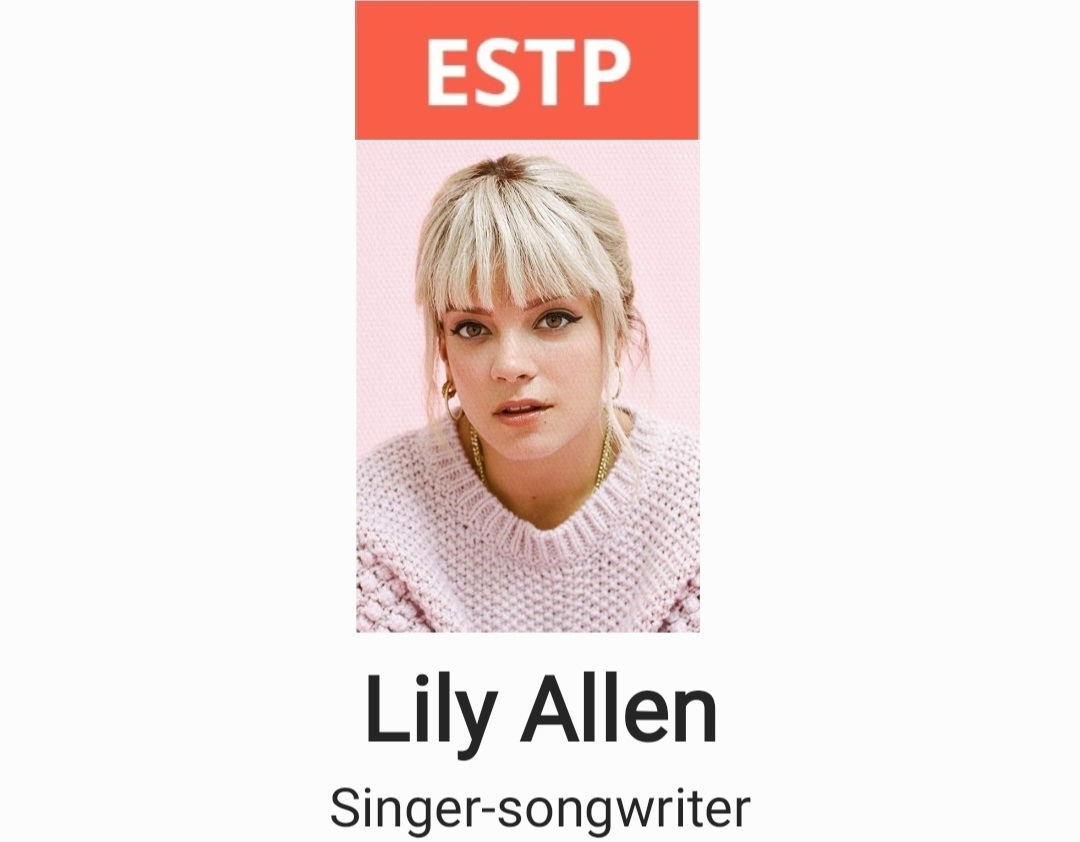
Allen: "I never really liked school ... I didn't
really like sort of authority, and I kind of felt
like I wanted to educate myself, really. I just
knew I was never gonna be at a job that
required me to have a degree."
 
Allen: “[I'm open] to any opportunities that
come my way."
 
Allen: "I definitely hope I'm touching a nerve,
because I think that's what I like to do, is to
get people thinking."

NY Time: "She [has this] kind of irresistible
frankness that has gotten her, time and
again, in trouble."


Plaza: "The only thing I don't like about [my
previous roles] is if it prevented me from doing
other things, and it has become a bit of a
challenge, because people are stupid and
afraid to take risks."

Plaza: "The most fun part [is] trying to really
find the truth in every moment so that you're
not making these wild leaps of logic."

Plaza: "You can't be fully prepared for 
something like [acting] because you don't
know how it's going to feel [until] you're
actually in the moment doing it. ... [You] just
[have] to kind of do it."

Plaza: "I never had a time in my life where I
thought 'I don’t know what I want to do'. It was
always me saying, 'I know what I want to do
and I want to do it now!'"
 
Harper's BAZAAR: "[She has a] straight-
talking attitude. ... She cuts through the
usual obsequiousness of what can be."
 

Plaza: "Scenes where I'm breaking down or having really crazy
stuff happening to me [are] hard. I've not had to have all of those
emotions coming out of me. I'm not a super emotional person."
 
Plaza: "I’m just in the moment at all times.”

Plaza: “I guess whatever my character has to say, I have to say. I mean, 
what are words anyway? They’re just words: ‘chair’, ‘lawn’, ‘fuck’!”

Clark Gregg: “She’s fearless, she does it in a way that’s so humiliating 
and so embarrassing and so completely brave that you can’t help but
love her. And as someone acting with her, can’t help but go there with 
her.”


Burr: "You have to be up here [in your head] and think logical, and not be in your heart."

Burr: "[Stand up is] like, This is what I’m doing now. ... I obviously learned from a bunch of masters, but it always flowed into me. When you find what you’re supposed to do there’s not a lot of thinking. It just is."

Burr: "Life is all about getting knocked down and learning how to come back up even harder. Not being stupid about it and keep running into the same wall the same way, you adjust and try to get over it."

Burr: "I feel like we live in this ridiculously over-sensitive time where people get offended over nothing."


Harding: “Honesty is the great essential.
It exalts the individual citizenship, and,
without honesty, no man deserves the
confidence of the people in private
pursuit or in public office.”

Steven J. Rubenzer: “[He was] usually
cheerful and pliable.”

Steven J. Rubenzer: “Harding always tried
to maintain a positive approach.”

Steven J. Rubenzer: “He was decidedly
not ‘contemplative, intellectual,
introspective, meditative, philosophical.’”

Steven J. Rubenzer: "Harding's enthusiasm
and optimism were his real assets as
president."


Steven J. Rubenzer: "Harding had great difficulty resisting
temptation and was not inhibited or restrained. Not liking to do
things alone, he very much enjoyed big parties, spending time
with people, and being part of a crowd. Definitely not known as
cold or distant, he welcomed close relationships and was warm
and self-disclosing. He was outgoing and friendly toward
strangers, 'casual, easygoing, informal, natural, relaxed,' and
made friends easily. Harding clearly saw himself as a lighthearted
person and very plainly showed it when he was happy. His
feelings showed in his facial and body language; his gestures
were adroit. He often felt very energetic and vigorous."

Steven J. Rubenzer: "Harding and Clinton ... were warm and
self-disclosing, outgoing, friendly to those they just met, and not
detached, secretive, or reserved. Each enjoyed being part of a
crowd and showed his emotions in his facial and body language.
Neither had a reputation for being distant or cold, nor was
'bashful, shy, timid.' They preferred to do things with others rather
than alone and made friends easily."

Steven J. Rubenzer: "Virtually nobody considered him cold or
calculating. Nor was he defensive or lacking in humor about his
faults. He empathized easily with others, believed most people
were honest and trustworthy, and assumed the best about those
he met."

Natasha Bedingfield

"As a performer ... you have to just be who you are."

"I want people to have fun. We need to let our hair down sometimes, because we get so serious."

"I enjoy the fact that you get to try different styles."

"I like clothes that are flattering on your figure - they can be designer stuff or not you know. It’s quite fun to mix the high street with vintage - maybe one designer item or something. ... You can finish up mixing and matching a lot with other things."


Scott: “I want to live big. I want to laugh big, I
 want to love big, I want life to know I was here 
… and somehow make a difference in the 
process.”

Scott: “Don't let your character change color
with your environment. Find out who you are
and let it stay its true color.”

Scott: “[I] want to live every moment to the
fullest.”

Scott: “Bubbly. Perky. Outgoing. That’s what
grownups always say about me.”


Scott: “I [always] wanted to be on the front lines. I wanted to be there, 
right in the middle of everything. You know, I’m the girl who loves to 
make grand entrances. I’ll always choose vibrant, bold colors over 
boring pastels and given a choice, I’d rather go somewhere than stay 
home. … Rather laugh than cry.”

Scott: “When it comes to having a relationship with God, I could sit here 
and tell you what to do and what to say and how to pray, but where will 
that get you if you just sit there? … Best thing I can tell you is, go after 
God. … Christianity is not a label, but a lifestyle, something that has to 
be lived from the inside out.”

Scott: “I hate cliques. I’m not into being labeled in any way. I don’t like 
wearing jeans that have somebody’s name on my back pocket. Forget 
Khakis and shirts with little emblems and sweatshirts with big fat names 
across the front.”

Scott: “I wanted to be a high-impact, make-a-difference, love-the-world-
and-turn-the-tide kind of Christian. Not a wimpy, polite, no big deal, 
politically-correct-and-don’t-make-waves kind of Christian.”


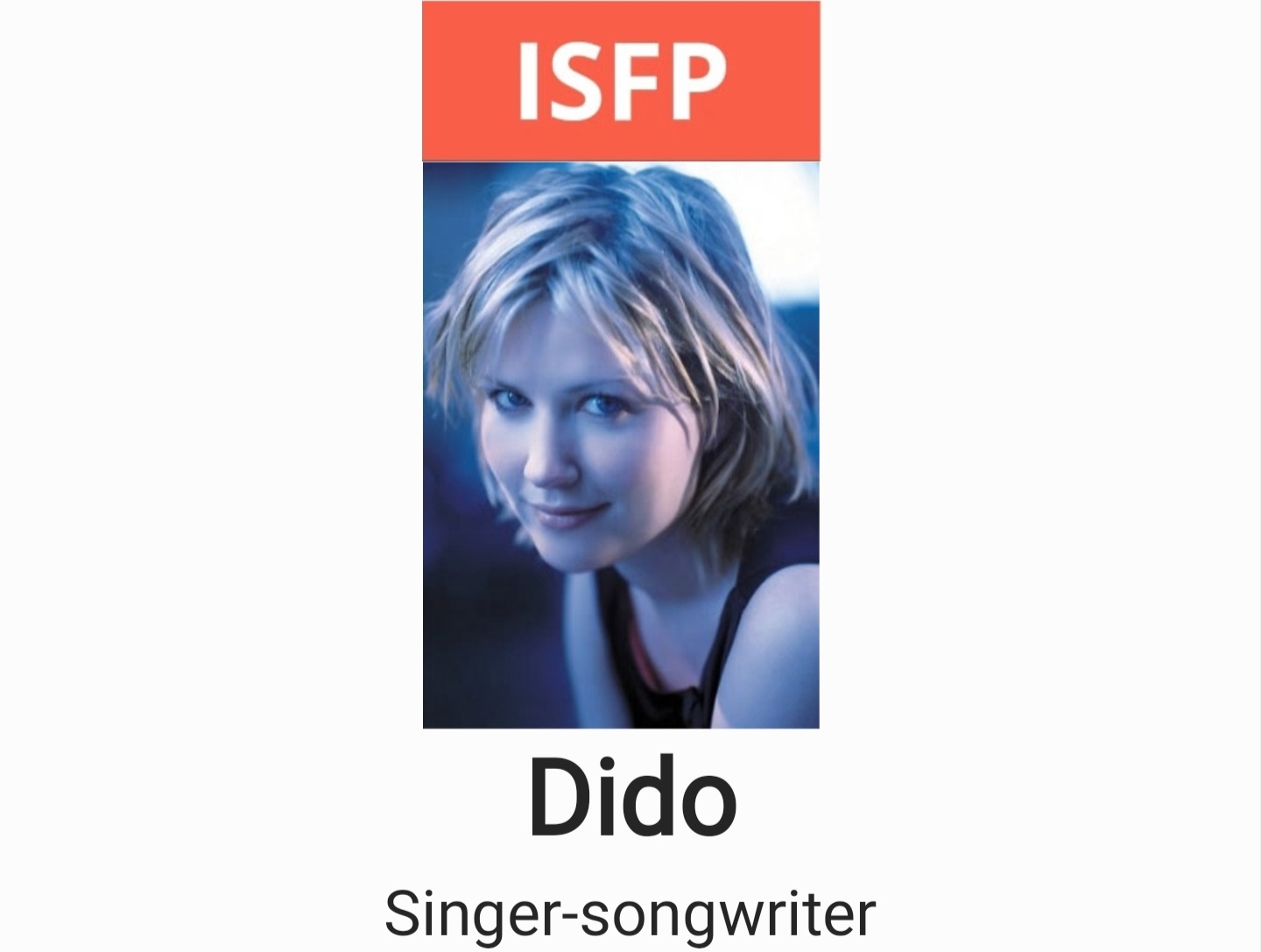
Dido: "I really feel things deeply and that’s 
why I write songs."

Dido: “I write based on how I see and feel
things ... It’s all about transferring how I see
 the world into a song."

Dido: "To me a song is just about the flow of
it, it just has to flow and me to never notice
in a way, it has to feel whole and real.”

The Guardian: "[Her parents were] angry at
her lack of self-discipline."


Dido: “[The way] sort of been the way I’ve been with everything in life [is]
if I’m not feeling like I want to put the music out, then I won’t put the
music out. Or if I’m not feeling the need to get up on stage, then I won’t
get up on stage.”

Dido: “People keep saying, ‘Why did you step away [from making
music]?' It didn’t really feel like that to me. I just write songs. ... I’ve
never made records until enough of it builds up and I feel like I’ve got
something to say."

Dido: "I [am] very clear on what [I] like, and what [I] don’t."

Dido: "Music had always been my personal thing, no one invaded
it, no one bothered me, it was absolutely mine. It was my escape.
Whenever anything was bugging me, I'd just go and play my
music and it made me happy. And there was something about
them giving me money for it that, to me, symbolised it being taken
away. I felt like I no longer had the thing that made my life worth
living."

Why I Think Christoph Waltz is ISTJ

The following blog will be more casual and less exhaustive/elaborative like some of my other ones but it is still something I think is worth considering:

Introverted Perception

Waltz: "I don’t like improvisation. I am not a writer and creating a script is a writer’s job. Mine is to interpret it. I wouldn’t like it if an author came up and told me how I should play a scene. That said, I think I also don’t like improvisation because I am not very good at it!" [Source: https://www.festival-cannes.com/en/2013/interview-christoph-waltz-i-like-to-put-myself-in-danger-in-order-to-test-my-limits/]

Se/Ne prefer to "riff" on the external world in real time while Si/Ni prefers to take things down into a "internal laboratory" and work through it. All else being equal, the quote above suggests introverted perception (Si/Ni) over extroverted perception (Se/Ne).

Why Si over Ni

Per IDRlabs regarding the difference between Ni and Si, "the Ni type’s train of thought operates by unconscious amplification and association, not by ... elaborating on the meanings found in singular objects and instances (as with the S type). The factor of amplification by association is much more forceful in Ni types, whereas Si types prefer to stay with the one task at hand. As Jung also says, 'the Sensation type remains with things' (Tavistock Lecture I §33). This 'thing' may be big or small, abstract or concrete, long- or short-term, present- or future-oriented, but the common denominator is that the psyche of the Si type stays in harness throughout the task set before it, whereas the Ni type leaps between objects and tasks by way of association and amplification of the individual objects to fit an overall process of association, rather than staying with the individual object in itself. The Si type may also operate by amplification, but it is usually by way of the concentration and patient focus on the amplification of one object that the Si type reveals himself."

To my mind, Christoph Waltz does not align with the Ni type's tendency to leap "between objects ... by way of association and amplification of the individual objects to fit an overall process of association" but rather stays with the specific task at hand:

Waltz: "I try to follow the lead of the writer, and the script ... and find what's in the case at hand and not so much in the generalization of, for example, the genre or the actor's persona. I really make an effort to stick to the individual character because it serves a very specific purpose. And without the specificity you have more or less nothing." [Source: https://www.gq.com/story/christoph-waltz-dead-for-a-dollar-interview]

Another quote where I find his Si quite prevalent:

Waltz: "When Jochen Rindt was racing ... I remember everything about his crash; I remember exactly where I was, all the details. I’m not particularly into motor racing, but I am into the tyre changes, the pit stops. It is the most incredible thing to watch. That’s perfect co-ordination between people and all their motor senses, every movement perfectly rehearsed. Each person is 100 per cent perfect and then it’s ten people together! The efficiency is breathtaking. The cars are machines, and that’s interesting too, of course. But this is ten people doing something which takes effort, concentration, knowledge and practice. It’s like playing a musical instrument." [Source: https://www.gq-magazine.co.uk/culture/article/christoph-waltz-interview-2021#:~:text=The%20efficiency%20is%20breathtaking.,like%20playing%20a%20musical%20instrument.]

(Furthermore, we could also argue for Te in that quote, focusing on and admiring the external mechanics like the efficiency of the tire changes.)

Ni types utilize their Te/Fe to arrange things to align with their Ni visions, which are holisitc, radical, removed from daily life, and are accompanied by an unwavering conviction that tends to hinder collaboration or compromise when implementing them. On the other hand, Si types approach decision-making and organization more meticulously. Their Te/Fe serves to make decisions in accordance with their Si observations, which are detailed, practical, and grounded in everyday realities (even if it's with a personal angle). Waltz fits the latter moreso than the former:

Waltz: "I have a less romantic and idealistic approach to acting. Over there [Germany], the business is based on mediocrity. On a high level, admittedly, but mediocrity. You reach a certain level, beyond which you will not go. Not just in career but in challenges and opportunity. It's interesting for the specific issue of how to cope with an actor's life. To lead an actor's life. What do you do if you have a stretch of five years where you only get mediocre offers and nothing to sink your teeth into? That's where it is difficult. Becoming an actor is one thing. Being an actor is entirely different." [Source: https://www.google.com/amp/s/www.hollywoodreporter.com/business/business-news/awards-watch-actors-roundtable-92140/amp/]

Waltz: "[I do acting because] it's my profession, no different than it is for any other profession. In medicine, the best caregivers are those without passion. The doctors that are too passionate are very often the ones who make serious mistakes." [Source: https://the-talks.com/interview/christoph-waltz/]

Lastly, one may even argue that his frustration of the lack of the thoroughness of others with regard to film may be indicative of Si:

Waltz: "[Dialogue in film] should be dealt with with equal attention and diligence [as the visuals], but sadly it isn’t. You only have to listen to people talk on the street, unless they’re talking this gibberish that seems to be the main mode of communication now." [Source: https://www.gq-magazine.co.uk/culture/article/christoph-waltz-interview-2021]

Inferior Ne:

ISTJs repress Ne, which is the function that is correlated with easily expressing oneself verbally. They, similar to ISPs, can dislike prosing their work:

Waltz: "I think it is absolutely ridiculous that actors go on their bonus DVD interviews and explain what they were doing. That’s not what an actor does. ... It’s completely counterproductive for an actor to talk about his part." [Souce: https://www.theguardian.com/film/2023/apr/27/christoph-waltz-my-only-regret-is-that-i-didnt-attack-nigel-farage-enough]

Waltz: "I don’t like talking about [my roles]. If you go into a restaurant and you have been served an exquisite meal, you don’t need to know how the chef felt, or when he chose the vegetables on the market. I always feel a little like I would pull the rug out from under myself if I were to I speak about the background of my work." [Source: https://the-talks.com/interview/christoph-waltz/]

Another aspect of repressing Ne in Si dominant types is that this could lead them to seek to stay true to a select few ideas over diverting to a multitude of ideas, as is the case with Waltz:

Waltz: "Whether it’s a job, a relationship, even a hobby that you follow for your own amusement: eventually, you get to the point where perseverance is what’s needed." [Source: https://the-talks.com/interview/christoph-waltz/]

Waltz: "What keeps you going is stubbornness, economic necessity, or simply endurance. ... You need persistence." [Source: https://the-talks.com/interview/christoph-waltz/]

[When asked about equestrian]
Waltz: "Riding is like singing, you need to do it on a regular basis to do it elegantly and so it is at least sufferable for the other creatures involved, be it your family at home in terms of singing or the poor horse in terms of riding." [Source: https://www.gq.com/story/christoph-waltz-dead-for-a-dollar-interview]

Additional Notes:

Regarding Te, some of Te can be seen in the "Jochen Rindt" from the quote before but here's another that I think could be indicative of Te:

Waltz: "It's the result that makes the art, not necessarily the process that leads to it." [Source: https://www.google.com/amp/s/www.hollywoodreporter.com/business/business-news/awards-watch-actors-roundtable-92140/amp/]

Why Björk is ISFP (to IDRlabs)

By S. Kim

In this blog, I will explain why I believe Björk to be an ISFP. While there is much to discuss about Björk being an Fi type, this post will mainly focus on why she exhibits characteristics of Se-Ni rather than Ne-Si. Since IDRlabs did not respond to my previous blogs about Gwen Stefani and Carly Rae Jepsen, I have decided to present my arguments for Björk's type without further delay.
Why Se-Ni over Ne-Si

With regards to self-expression, IDRlabs has said the following, "as we know from Myers, Jung and van der Hoop, types who have Ne as one of their two top functions (such as INFPs) tend to find self-expression easy. ... By contrast, we know from the same authors that the concepts distilled by Ni tend to have a hard time finding an outwards expression that adequately conveys what is going on inside." While both Fi-dominant types may often feel that they struggle to do their Fi vision justice with regards to self-expression, all else being equal, an ISFP is going to typically have a much harder time expressing themselves verbally than an INFP and will see words as inadequate when trying to convey the inner values that they hold inside. That is to say, compared to the INFP, the ISFP typically doesn't like talking about their art/actions, as to them the art/action speaks for itself:

Björk: "[On tour I] do them interviews and try to explain something which is actually quite unexplainable, really. You know, I was asked earlier today to name 3 of my favorite albums at the moment and why, and it's just impossible, you know? And music should be that way, you know? It's unexplainable. It's one of the few things we got left in our culture which is not explainable." [Source]

Björk: "I find it more important to make music than to talk about it." [Source]

Additionally to all that was previously stated, IDRlabs has said, "of all the 16 types, the ISFP is perhaps the type that is the most at odds with expressing themselves adequately, because of their Fi-Ni axis. But their difficulty with traditional modes of self-expression will frequently be made up for by ingenious modes of alternative self-expression. (Through music, art, design, etc.)" The following exchange between Björk and Charlie Rose showcases this:

Rose: "My sense about you, in reading and knowing a little about your music, is that you have always been in love with sound - all kinds of sound."

Björk: "Yeah."

Rose: "Not lyrics, sound?"

Björk: "Yeah."

Rose: "Right? Tell me about that - all kinds of sound."

Björk: "Yeah, it's just the one most all-embracing, forgiving, understanding thing there is. Just in the full abstraction of it, it doesn't ask any questions, and you don't have to explain yourself. And it's the one world where that can cover all of the emotional levels of you. I'm the sort of person, when it comes to say something like language or just communicating on a daily basis, I feel like I'm trying to put an ocean through a straw. And with music..."

Rose: "Because you feel so much, hear so much?"

Björk: "Maybe just because I'm not very good at it, you know, but with music, it doesn't feel like that. And it's not only me making music, it's also listening to other people's music that it's just like a warm embrace, you know?"

Once again, the common theme of struggling with verbal self-expression is evident. Björk herself acknowledges that when it comes to language or everyday communication, it feels like trying to fit an ocean through a straw. However, when it comes to music, this challenge doesn't exist. This aligns with IDRlabs' analysis of ISFPs, who face challenges in adequately expressing themselves verbally due to their Fi-Ni but will often compensate for this by finding ingenious alternative forms of self-expression such as music. It also corresponds with IDRlabs' observations about Ni users, who have difficulty expressing their internally generated concepts outwardly.

Furthermore, Björk expresses her affinity and affection for sound (in the empirical sense) rather than lyrics. She describes sound as an "all-embracing, forgiving, and understanding entity" that does not require explanations or justifications. This perspective aligns with IDRlabs' interpretation of Se, which emphasizes its tendency to see phenomena as "self-evident" and standing independently. As IDRlabs states, Se operates "off of phenomena that are to a greater degree capable of standing on their own (i.e. being thought more 'self-evident') than is the case with the other ... functions." Sound, to her, is self-evident in its emotional depth and ability to encompass various levels of human emotions which, to me, comes across as Se being subordinate to Fi. One might argue that I may be misinterpreting the meaning of "self-evident" in this particular context, as used by IDRlabs. However, in my understanding, "self-evident" in relation to Se implies perceiving something that inherently stands on it's own terms, without the need for further explanations. In my opinion, the quote applies to her quite accurately. It is worth noting that Se might be slightly muted in her case due to her not being Se dominant and not repressing Ni.

In addition to the challenge of expressing oneself, another case for Ni in the exchange is where she employs Ni to incorporate her comprehension of "the full abstraction" of physical objects (in this case, sounds in music). However, it is important to note that her Ni isn't "differentiated." That is to say that her use of Ni, in this context, is in service of Fi and Se rather than the other way around. As IDRlabs has said about Ni in ISPs, "[their] Ni [is often] channeled into specific objects (arts/crafts) instead of intellectual theories." In the case of Björk, her Ni is not used for its own sake, but rather to understand the physical qualities and aspects of music (Se) that corresponds with her dominant function (Fi).

Her perception of phenomena as "self-evident" extends beyond just music, as it also applies to her performances (though this could admittedly apply to Te as well in this context):

[Interviewer: "Did you have a good time on stage?"]
Björk: "Yeah, it was good."
[Interviewer: "Why was it good?"]
Björk: "You know, it's just a feeling thing really. Hard to describe, really. Either it functions or it doesn't." [Source]


While ISFPs are not typically as cerebral, radical or dogmatic as types with more conscious (dominant or auxiliary) Ni generally are, their ideas, with the help of their semi-conscious Ni, are more focused and singular compared to an INFP, assuming all other factors are equal. To mention the Charlie Rose interview for one last time, the following quote showcases a great example of this singularity:

Björk: "The reason why I don't want to act again is not because of the film ... it's more that I feel my time is running out, and if I'm lucky, I've got 50 years and I still haven't even touched ... the music I want to write. And you have to be loyal and give yourself away to the music you love to get some results, you know. I think [the] sort of shallow 'I'll try a bit of that, I'll try a bit that, I'll try a bit of that' is not gonna give good work." [Souce]

Another aspect of Tertiary Ni in the ISFPs is that it makes their ideas much more elusive, in the mind of the ISFP. That is to say, compared to the evocative inner world of the INFP (Fi-Si), the ISFP's inner world is more elusive (Fi-Ni). The ISFP is going to typically want to capture and express that image, even though it may be impossible to fully grasp. A good instance of this Fi-Ni axis manifesting itself in Björk is later in the previously mentioned interview with Charlie Rose:

Rose: "Is [there] anything you want that you don't have?"

Björk: [Pauses] "I feel, to be brutally honest, the music I can hear in my head, I'm still very, very far from making that. So I just really have to be careful to concentrate my time and to continue, and if I'm lucky, I will maybe do it ... before I die."

Rose: "What do you hear in your head? What music?"

Björk: [Takes long pause] "It's very hard to describe. I guess I would like it to be both a lot more better crafted and complicated, but at the same time, a lot, lot, lot more spontaneous and still feel effortless. But then again, it's hard... yeah, I can't explain it."

However, as a disclaimer, it's important to note that the INFP can still face difficulties in translating their vision, similar to the ISFP. While their internal landscape may be more accessible, the challenge lies in capturing and conveying the depth of their inner values in a way that fully aligns with their original vision. Both types can struggle with bridging the gap between the abstract and the concrete but in slightly different ways based on the unique dynamics of their cognitive functions.

In addition to all that has been said, because of this difficulty in "expression in words and analytical prose," as IDRlabs puts it, one will typically find the ISFP relying more heavily on, and may be more interested in, non-verbal forms of expression and communication that Björk expresses in these examples:

[Interviewer: "Do you see your show, when you're on stage, as some kind of entertainment or music primarily?"]
Björk: "I see it as a communication. I don't want to analyze it because it would make it very boring for me." [Source]

[Interviewer: "Obviously, we all think of you as a musician. So, what do you think of the acting business?"]
Björk: "I guess I'm not really impressed, really."
[Interviewer: "No?"]
Björk: "No."
[Interviewer: "You only had one go; it might get better. What didn't you like?"]
Björk: "There's too much talking. Yeah, I'm more into singing." [Source]

Although one may conveniently dismiss all this evidence by saying that English is not her first language, I don't believe the quotes (or at least most of them) I provided are directly related to the context of a language barrier but rather reflect her inclination towards Se-Ni, for the aforementioned reasons I already mentioned. But even if her language barrier did play a role, it does not detract from the fact that she, regards music as unexplainable, perceives music that speaks for itself, prioritizes creating music over talking about it, exhibits an empirical interest in sound rather than lyrics, favors non-verbal communication and expression, prefers not to analyze her performances, and views the film industry as excessively verbose.

Björk's Attitude Towards the Immediate Situation

Now, when assessing someone's type, the parameters will always be relative but one recurring characteristic found in many INFPs is their tendency to be at odds with reality. That is to say they often experience a certain discontentment or frustration with the status quo and are attuned to issues that transcend the immediate situation. This can be attributed, at least in part, to the prominence of Ne in their consciousness. According to Jung and Myers, individuals with conscious Ne constantly desire a means to transcend and break free from the limitations of their current circumstances, even if they are uncertain about how such liberation can be attained (As IDrlabs has said, "the escape from the status quo is worth more to the Ne type than the world as we know it). Another aspect of this is their Tertiary Si; because they are dominant Fi types who prefer Si over Se, they tend to seek a more perfect reality isolated within themselves. (Kurt Cobain is a good example)

By contrast, while an ISFP (or any other type) can also feel frustrated with the current state of affairs, all else being equal, they tend to be more in tune with the natural flow of life than INFPs. This is because their Se is fully conscious, which allows them to be more at ease with reality. This does not mean that ISFPs are never at odds with reality (they are dominant Fi types after all), but rather that they are more at ease with the world around them and more willing to work within existing circumstances. In other words, ISFPs are more inclined to make the best out of the immediate situation instead of constantly seeking ways to transcend or escape from it like INFPs. 

I don't see Björk typically displaying (at least comparative to other INFPs) the same need to escape the status quo. Rather, her expression is based around either accepting or embracing the immediate situation (as opposed to trying to step outside of it):

Björk: "Say, if I do my next album in '96, it will be '96, like more 'now'. Not the collection of old songs." [Source]

Björk: "All these people who say cars are so ugly, pollution’s so terrible—it’s true, but if you don’t want to live here then move into the forest. And if you are gonna live here, you might as well accept it and make the most out of it.” [Source]

[When asked if the development of science and technology interests her, and if it's connected to Iceland's modernization]
Björk: "I think it's not me being obsessed with technology. I think it's more I want to be alive 'now,' 1997, I'm a European, and I want to be truthful about what I'm about." [Source]

Björk: "I think there's bad sides to [fame] but also good sides to [fame]. You know, it's sort of a thing that happens to you. I've met enough people who do similar jobs as I do to figure out that it's not about if you want it to happen to you or if you don't want it to happen to you, it sort of picks you more ... and then you have to, I guess, you just have to kind of live with it. And there are times when you don't want any of it - you don't want the bad things to come with it and you don't want the good things ... but then you kind of realize, because you're gonna have to deal with the bad things whether you like it or not, then you might as well enjoy the good things. Which in my case, the fact that at any given time right now, if I were to write a song now, I could go into the studio and I could ask certain people to come, ... and I could put it out and it would come out in the record shop." [Source]


As an aside, I would like to note that these quotes can't simply be chalked up to over-active tertiary Si. I personally wouldn't give the Tertiary function that much credit (even though we shouldn't underestimate it) but even if we were to consider that perspective, all (or at least most of) the quotes that was mentioned in this blog seem to suggest that her relationship with the empirical world is more visceral, dynamic, and flowing than refined, restrained, and archived. In addition to all the quotes that has been mentioned in this blog, here are more quotes that seem to suggest a preference for Se over Si:

Björk: "What's kind of always truly been ... where my heart is, is making music and ... sounds, noises, and surroundings that I find exciting and interest me. While being a singer is mostly like a bit of a tool to be able to do that." [Source]

Björk: "It’s very important if you want to enjoy life to have excitement about it, curiosity and appetite for it. ... I’ve got quite a big appetite [with life], I take a lot but I give. I’m very much about that and that’s what keeps me going. I need that like a junkie almost with my friends and people I work with.” [Source]

Additional Notes

Lastly, I would like to showcase another quote from Björk that indicates a Sensation preference:

Björk: "One of the reasons why I made my album [was] because I admire pop music so much, but I was so tired of going to record shops and not finding pop that fulfilled me. I wanted to make really, really simple songs that are about my life, you know? Something I can identify with, you know? So, I ended up having to go and do it myself, you know? I listened to the radio all the time and the pop channels, but so few tunes out there have anything to do with my life. I can't identify with them, these things, they never happened to me." [Source]

While this quote may showcase her preference for Fi more than anything, one thing I also got out of this quote was her preference for the actual occurrence over conceptualization or abstract association. She wants simple songs that reflect her real-life experiences, music that has a direct connection to her own life rather than relying on abstract association.

Why Carly Rae Jepsen is ESFP (to IDRlabs)

By S. Kim

So I wrote and sent my blog post about Gwen Stefani's typing to IDRlabs through email, which they overlooked (probably due to their focus on personality tests). Instead of persistently seeking a response from them regarding my disagreement with their stance on Gwen Stefani's type, I have chosen to write about another person's typing that I also disagree with IDRlabs on. Regarding Carly Rae Jepsen specifically, she, just like Gwen Stefani, is also typed as ENFP, despite me personally believing they are ESFP. In this blog, I will seek to give an explanation as to why I disagree with IDRlabs with regards to Carly Rae Jepsen's type.

Her Direct Focus on the Ever-Changing Object

As Boye Akinwande puts it, “Se ... is an extroverted perception function that doesn’t seek to shape the current object, but to be aware of it in the most direct way possible and to magnify it. By engaging themselves with the relevant and essential objects ... they are able to appeal to a large demographic and flexibly make the most out of the current situation. Se types [can] often [be] singular and direct in pursuit of their goals, making them appear as extroverted judgment types, but through examining the history of their ideas it becomes clear that they are less consistent, more freely adapting themselves to the unordered ever-changing object.” Here are some quotes from Carly Rae Jepson that exemplify the previously stated description of Se:

Jepsen: "Keep your eye on the ball and don't expect that the second record is gonna be at all like the first record, and don't expect what's happening today is necessarily gonna be happening tomorrow." [Source]

Jepsen: "26 years of trying different avenues to hopefully get that breakout in Canada, and that's the goal. And you don't know how it works because there isn't sort of some set rule like 'if you do this, this, and this'. ... When young artists ask me, 'what do you do?' it's sort of like, 'I don't know,' because half my story has been very much based on luck and kind of being in the right place [at the] right time. ... I think about the 3 minimum wage jobs that I was keeping and the posters that I go around putting out myself in Canada. You can't really be too upset getting to travel and do music for a living." [Source]

Jepsen: "You have to understand, this wasn't like 'this happened to me because I casually went into a studio and made a song' ... I had been hustling since I was 7. Like if you were to ask me from age 7 on, 'what do you want to be?' I was like, 'a singer' ... My point is that this is a passion of mine. I couldn't believe it. So, it didn't matter if you had told me to do 14 interviews in 1 day. Didn't matter what the ask was, I was happy to be there. The answer was always yes. I was a little workhorse, but I was just like living my actual dream." [Source]

Jepsen: "The music industry is never going to be like a stagnant thing. It's always constantly evolving, and I think as an artist, what I look at is the challenge [of] figuring out how much you wanna morph around and change and be compatible with like the new stages of what kind of causes growth for your career." [Source]

In all of these quotes, the emphasis is on the realistic awareness of circumstances and making the most out of it. While one might say that Ne types are also capable of having this quality, one thing to consider is that Ne types, according to IDRlabs, "are often in danger of getting a bit high on their own thoughts and associations and then spending a lot of effort on those as opposed to spending a lot of effort on reality." There is also a lack of the transcendental quality that is typically associated with Ne within these quotes in that she is more focused on the immediate situations themselves (e.g. her saying "keep your eye on the ball" and "being in the right place [at the] right time") rather than "overstepping" it to get to the associations. As IDRlabs has said, "Intuition is not Sensation with an extra layer: Intuition oversteps the object, while Sensation remains with it." All else being equal, the quotes shown above, if taken holistically, indicate a preference for Se over any other perceiving function. For an even more concrete example of Se, look no further than the quote below:

Jepsen: "I don't overanalyze a song when I'm listening to it. ... If someone's asking me to, then I think I switch into that brain-head, but I can just kind of enjoy it. That being said, I think everyone can feel when, 'oh first listen, that song is quality and those melodies are so tight, and everything feels right away when I don't even need to listen to give a review on it.' ... It's like a slam dunk first listen. You don't need to go back and get used to it for it to be good." [Source]

In this quote, she is showcasing a preference for experiencing and feeling the object (in this case, a song) out to the fullest, without the need to conceptualize or make associations about it; what Jung coins "the highest pitch of actuality". In other words, her immediate reaction to a song is much more (colloquially) intuitive than associative. As Michael Pierce puts it (in his IDRlabs article: A Definition of Se and Si), "sensation is present so long as it is experienced ... from the thing itself, and not just from an idea about the thing, or a concept associated with the thing. ... For Sensation, it is whatever arises from the thing itself, as it stands, that is of primary psychic importance. Intuition, on the other hand, is not stimulated by the thing itself, but always by ... the associations that could be made on the basis of it. Intuition is concerned with what is about the thing, and not with the thing in itself." 

Now, when discussing about the differences between types and functions in Jungian Typology, it's important to remember that it's always relative. With that said, as we just touched upon eariler, S prioritizes the thing itself, whereas N focuses more on the associations surrounding the thing. If we take it that both S and N are extroverted, then Se "sticks" with the object (an innate attraction on the object itself, whether it'd be physical, abstract, etc.) while Ne bypasses the object and instead explores its intellectual associations (connecting-the-dots in an associstive manner rather than remaining with the objects themselves). To my mind, Jepsen prefers "sticking" with objects rather than "bypassing" them:

Jepsen: "As soon as I got to meet everybody [at the Junos], it was really casual and really laid back. And you know, there's great food, there's great people. And I honestly love the same thing that I loved watching them on TV, which was sort of seeing what everyone's wearing and kind of letting my little girly side come out." [Source]

Jepsen: "I love the way [Carly Simmons] writes, which is very ... to the point; there is not a lot of metaphor to it. But I think it's really relatable and honest. And I love her fashion sense, I love her taste in men [laughs]. I think that there's something really beautiful about that honesty. But also, like a great jazz song, it doesn't need to be totally confusing for it to still be really potent. And I think that sometimes a really direct lyric can be just as powerful, if not more." [Source]

One may argue that the 2nd quote regarding Jepsen's affinity for Simmons' direct and straightforward lyrics is more of a mental content, which I don't necessarily disagree with. I agree that we shouldn't anticipate individuals to communicate their cognitive processes directly (rather, we must construct a representation of the way in which the person's cognition operates) and we shouldn't take everything someone says about themselves at face value with regard to their cognitive process, but if we look at the quote in conjunction with all of the other quotes provided (as opposed to in isolation),  it supports the idea that Jepsen prefers "sticking" with objects rather than "bypassing" them.

Lack of Preference for Introspection 

If one is unfamiliar, IDRlabs adopts Kiersey's idea of merging introspection with Intuition. While I do agree with that idea in a general sense, I wouldn't take that statement too absolutely. From my observation, individuals who are Sensation types can still be introspective, despite Sensation being generally more extrospective than Intuition. Having said that, in my view it is less plausible to find an Intuitive type who is low in introspection than it is to find a Sensation type with decent level of introspection. That is to say that if the individual in question stated or showcased something that indicates a lack of preference for introspection, then it could be a good indicator that the individual is not an Intuitive dominant type (ENFP in this case):

[Interviewer: "Do you have, like, an idea, mantra, a way of viewing the world that you say, 'This is who I'm about'?"]
Jepsen: "I don't know if I really thought about it that much. I think, in general, I try to be really thankful and appreciative for everything that I have. And I think number one, always live in the moment - like be 'here' and be happy that I'm here and be happy that I'm talking to you, you know - and looking forward to seeing how far I can run with it." [Source]

Introspection, as IDRlabs sees it, is "the observation of one’s own mental states ... [and] close to the raw stream of mental experience.” When Carly Rae Jepsen is asked about her worldview or personal philosophy, her response indicates that she hasn't given this question much thought, saying "I really thought about it that much", indicating that she isn't very connected to the raw stream of her mental experience. However, as IDRlabs puts it, "this is not to say that more introspection is necessarily better or that 'Ns are Ss with an extra layer.' Barack Obama, by wide agreement, has a very high level of introspection, but has often been faulted for being indecisive and 'stuck in his own head' for this reason."

Another aspect that is worth mentioning is that, later in the quote, she emphasizes making the most out of a given situation, emphasizing being "in the moment" and "here", and seeing "how far" she can run with it. While some may argue that this aspect of the quote is more of a content (since the interviewer is asking about her personal philosophy) and therefore not a direct component of a type, which I somewhat agree in that while this part is not as strong as my argument regarding her lack of introspection above, it does serve as a good connection for evidence supporting Se considering all of the other evidence.

Introverted Feeling

Fi's values are based on interfacing with themselves (purified from outside influence) whereas Fe's values are based on interfacing with the outside world (informed by outside influence). As IDRlabs has said about Fi, "Introverted Feeling is attuned to the values that are peculiar to the individual’s own consciousness." I agree with IDRlabs that she is an Fi user. To my mind, her Feeling is primarily oriented towards subjective factors; in other words, when push comes to shove with regard to Feeling, she doesn't rely on some kind of external criteria:

Jepsen: "I'm still kinda in my exploration stage with the red carpet, where I think at the beginning I felt like 'oh it has to be this very elegant, sophisticated thing,' and then I would find myself on the red carpet almost playing the part of like this person who I'm not, which is [a] total, total gong show. And I realize more and more that for me, it's actually more important to find something I'm really comfortable in and that I still feel beautiful in, and you know, dress appropriately for the event, but that still feels very like me. ... It's kinda my decision to pick something that excites me." [Source]

Jepsen: "Before anyone had heard [my album] Emotion, I had to kind of figure out how I felt about it and let that be the truth. And then it landed for me as just something really honest that I felt passionate about. I was really proud of it and happy to share it, but I felt like whatever happens now could go either way. ... I just don't want to feel like it couldn't have gone the other way and that would have changed my feeling of it." [Source]

Jepsen: "I know some performers ... got like this stage idea, [but] I feel like I'm just myself, and I'm myself performing, and I'm myself at home. And obviously, you get to be a little bit more theatrical and over the top when you're on stage, but that's a very sincere part of my personality." [Source]

Jepsen: "I feel like I don't have to have an authentic self and a non-authentic self that I have to put a shield on or some make-up. I think that it's kind of maybe why I do shy away from big, big, big styles of celebrity life because I think you could get lost in that, and I try very hard not to. ... It's just not the part that appeals to me of 'what it is to be a musician'. It's much more about the music than it is about the fame." [Source]

Additional Notes

Moving on to this final bit, this part will take a step back from the functional approach and focus more on the general tendencies of the ESFP. As a disclaimer, typology is about cognition, the general tendencies exist because the functions in a certain order can often manifest in certain recognizable ways. But the keyword there is "often" and not "will." So all that to say, correlation is not causation (this really seems to be a problem in the typological community) and the general tendencies that will be mentioned are incidental and not essential. 

However, with all that said, if we look at this section in conjunction with all of the evidence provided (as opposed to as an island unto itself), I think it's a good addition. Now that we got that disclaimer out of the way, IDRlabs in their ESFP description has stated that "most ESFPs love to live vivaciously and will approach their tasks and hobbies in a spontaneous and energetic manner where they see life as an adventure" and that "their primary interest lies in seeking out all that life has to offer, and exploring a multitude of adventures in search of mindfulness and self-expression. ... ESFPs tend to be people and imminence oriented", both of those characteristics fit Carly Rae Jepsen very well:

Jepsen: "If you saw even the background leading up to getting any success in Canada, it was a long, sort of treacherous hike. ... Even when it wasn't working, I had no intention of giving up. I'll be like, 'Well, this will still be a fun adventure to try forever.'" [Source]

Jepsen: "I wanna keep touring. I wanna keep making music that's always like a 'what album can I make next' kind of feeling. It's just in my blood for sure, but I have a whole list of goals. I'm really excited about getting to shift direction at some point into the Broadway world. I don't know what that looks like, but that's always been a dream of mine - to kind of redirect focus into theater. But right now, I'm just enjoying getting to tour and celebrate this album." [Source]

 Ryder's Sensing seems to be based around habit rather than around improvisation and fresh experiences (Si over Se). She continually ret...