Search This Blog


Curtis: "I prefer to think of everyone as an individual."
Curtis: "I like to think that [Joy Division doesn't] belong to any category."

Curtis: "If I'm listening to music it tends to be the persons attitude towards the music they're making that influences me more than the actual music that's played." 

Michael Sweeney: "He was kind, intelligent and someone with real feelings." 

Len Brown: "Tributes paint Curtis as a lost prophet; as [someone] more sensitive, braver, and perhaps closer to God or godlessness than the rest of us; as if he'd held up his cracked mirror to show us how hopeless, meaningless and inhuman our world had become."


Amos: "I think you have to know who you are. Get to know the monster that lives in your soul. Dive deep into your soul and explore it."

Amos: "When you're growing up ... having an imagination is not really encouraged. ... Most [adults] have cut out that part of themselves that still imagines ... more than just [what is] functional. ... [A purely functional life] is not living, that’s being dead."

Amos: "All the problems start at the individual level. ... It all goes back to dealing with yourself. Because when you do, your needs change. ... You call different things to you."

Amos: "I have many sides. ... It’s finding balance with all these different sides of myself. I kind of invite 'em over for a plate of spaghetti. Have 'em all at the table."

Trent Reznor: "Tori Amos ... I always respected her work a lot." 


Morrissey: "Age shouldn't affect you. It's just like the size of your shoes - they don't determine how you live your life!"  

Morrissey: "I'm lying in my bed and I think about life and I think about death and neither one particularly appeals to me."   

Morrissey: "Sexual terms just segregate people, it's all monotonous and an insult to their individuality." 

Morrissey: "Everything I am was conceived in [my] room. Everything that makes me is in there."  

The Face: "[He spent] years of teenage trauma and monastic introversion, alone in his room with the Complete Works of Oscar Wilde." 


Yorke: "The whole point of creating music for me is to give voice to things that aren't normally given voice to."      

Yorke: "The West cannot shake its need to control the rest of the planet in any way it can. They cannot shake off this colonial attitude."      
 
Yorke: "The difference between me and Bono is that he's quite happy to go and flatter people to get what he wants and he's very good at it, but I just can't do it. ... In a way it would help if I could, but I just can't. I admire the fact that Bono can, and can walk away from it smelling of roses."
 
Yorke: "I think the most important thing about music is the sense of escape."

Yorke: "I'm good at getting things going, firing things off, I'm no good at seeing things through. Terrible at it, actually."

Jonny Greenwood: "One of the things that’s so good about him is that he’s a performer with emotional convictions.


Reznor: "I am [sometimes] written off as aloof or stand-offish when I'm [really] shy and don't know what to say."
Reznor: "When I did ['Head Like a Hole'] that was how I felt in my head. When I did 'Downward Spiral' that is where I was for that. I try not to be too concerned about ... what [people] are expecting from me."
[Interviewer: "What is the significance of the name 'Nine Inch Nails?'"]
Reznor: "[It] just kinda popped into my head. Two weeks later I still liked it, so we just went with it. As far as any significance, I just like it because it looked good in print." 
Reznor: "Music ... that inspire emotional connections are so much more important to me than things that only have utilitarian ends."


Bowie: "My music [expresses how I feel] for me. There, in the chords and melodies, is everything I want to say. The words just jolly it along."
Bowie: "I had to resign myself, many years ago, that I'm not too articulate when it comes to explaining how I feel about things."
Bowie: "[My music has] always been my way of expressing what for me is inexpressible by any other means."

Bowie: "The majority of the stuff that I do is totally ... about where I am physically and mentally at any moment in time and I have a far harder time than anybody else explaining it and analyzing it." 

Lady Gaga: "How I love David Bowie!"


Hepburn: "I think life is all about ... children and flowers."
Hepburn: "I never think of myself as an icon. What is in other people's minds is not in my mind. I just do my thing."
Hepburn: "I've [always] followed my instincts and they've brought me nothing but blessings and good fortune and terribly kind people to work with."

Hepburn: "I never liked words very much, I don't deal with them very well. I love music, I love dancing because you could do it all to music which sort of takes you out of yourself." 

Sophia Loren: "Audrey was meek, gentle and ethereal, understated both in her life and in her work. She walked among us with a light pace, as if she didn't want to be noticed."


Stefani: “I’m into having a good time and entertaining people.”

Stefani: "Every night's different. You can't tell if it's gonna be a good show or a bad show. That's what's kind of exciting, I guess, about it. You never know, [you just] get up there [on stage] and see what happens."

Stefani: "I don't have a plan; it's been basically chasing dangling carrots everywhere I look.”

Stefani: “I always hate talking about fashion. … To me, fashion is something you don't talk about, it's something you do. [And something] you wear and you look at."

Stefani: "No one can force me to do something unless I'm passionate about it."

USA Today: "[She has] youthful enthusiasm [and] breathless energy."


White: “I love doing things that people say can't be done.”

White: "The way I handle things [is] everything is on a case-by-case basis and [I'll] deal with stuff as it comes."

White: “I love to win.”

Trump
: "There's nobody like this guy, I'm telling you. ... He could do anything. He is so smart, so tough, so cunning."

Rolling Stone: "He’s taken mixed martial arts, a sport that was essentially moribund seven years ago ... and turned it into a moneymaking, crowd-frazzling sensa­tion ... He accomplished this by using various business-savvy strata­gems and dodges. ... How he did it really is by the force of his own multifaceted personality. At 38, he is ... charming, ambitious, [and] cunning.”
 
Gregg Doyel: "He's charming, persistent, persuasive and magnetic.”
 
Chuck Mindenhall: "He doesn’t always tell the truth, but somehow — through audacity and red-faced guile — White keeps pushing this sport into bigger and broader realms ... and upping his own ante."

Lorenzo Fertitta: "[Getting into the UFC] I figured that if I went out and hired a Harvard MBA, we'd probably [go] out of business. ... [The reason I hired Dana White was because] we needed somebody that was street smart."

Lorenzo Fertitta: "Dana has no filter. ... Dana is all about saying exactly what's on his mind."

Lorenzo Fertitta: "Dana is a great promoter."


Biden: "[A fundamental] part of being a public servant [is] absorbing the anger of people who don't know where to turn."

Biden: "I have found that [with] most people, candor generates trust. ... [This approach] has always worked for me."

Biden: "[Obama and I] kind of balance each other. ... [I am someone who will] hug [and] touch [people] ... whereas he is not emotive that way. That's why we make such a good team."

Bob Woodward: "Around the White House, Biden was known as 'the [Republican] whisperer': The person who knew the right combination of sympathy and gentleness - never force - needed to work with the minority."

The Atlantic: “Though plenty smart, Biden is not an intellectual. He makes few references to books and learned influences in his speeches and autobiography, and he displays little interest in theory. An indifferent student at the University of Delaware and Syracuse University College of Law—he describes the latter as 'boring'—Biden got by with prodigious cramming sessions. Today, by contrast, he is described by Tony Blinken, Biden’s national-security adviser, as a compulsive studier who likes to be overbriefed."

The Atlantic: “The guideposts in Biden’s political landscape are often not ideas, but people. Many of the world leaders with whom the United States has business are men and women he has known for years, even decades. In fall 2009, for example, after Obama had decided to abandon plans to build land-based missile defenses in eastern Europe—a move interpreted as a concession to Moscow—the White House sent Biden on a three-day swing through Poland, Romania, and the Czech Republic to reassure the leaders of those countries that their security would not be compromised. Biden had mastered the details of the issue—the virtues of sea-based anti-missile technology versus land-based, and so on—but his most important asset was that he knew many of the leaders personally.”

The Atlantic: “It’s clear that Biden feels he has the superior people skills—not that he puts it that way. He says the skill set he brings is ‘different,’ but it’s a difference he values, and one that he sees as part of his contribution to the administration. … ‘I’m a little more Irish. I’m more old-school.'"

The Atlantic: “In his personal life, Biden could hardly be more traditional. In the scruffy ’60s, when so many young men of his generation went unkempt as a social and political statement, Biden dressed up for class in college, sometimes wearing a tie. He says his first wife, Neilia, described him as ‘the most socially conservative man she had ever known.’” 

Howard Fineman: “Biden is not an academic, he's not a theoretical thinker, he's a great street pol."


Hefner: “The Hugh Hefner that is relatively not known to the public is an intensely romantic person and very sentimental.”

Hefner: “It's always been [the] romantic [aspects] that's really turned me. … And the remarkable thing [is that] I am as romantic a pushover today as I was when I was a kid, and I'm glad."

Hefner: "I withdrew into ... a lot of my own dreams and fantasies, and that's what led me to … the creative arts.”

Hefner: “I was tremendously influenced by movies and by the romantic songs of the time, and I think that in a very real way I escaped into, in childhood, romantic dreams and fantasies as a kind of the equivalent of love. And I think most of my life has been a search and a quest for that perfect world that was described in the films and songs."

Rolling Stone: “For the past 18 months, I’ve been studying the guy, mostly up close and personal. … The Hugh Hefner I found is more interesting than [his image], more cautious, more human. He’s fragile, romantic and full of ideals. He has given his life for a cause.”

Steven Watts: “He tended to be reserved in formal situations at school or home. ... Absorbed in his imagination, he often neglected his studies. ... Indeed, throughout childhood Hefner created vivid fantasy worlds in which he immersed himself, a trait that would prove to be lifelong. The boy who wouldn’t answer the telephone or venture alone to the dentist’s office a few streets away preferred to inhabit a reality he had created.”
 
Steven Watts: "[His mother] Grace was repeatedly struck by Hugh’s insular creativity. 'As a child, he found it very difficult to make new friends. When he was in school, he was a dreamer, and sort of lived his own life in his own mind,' she observed. 'I would ask him who some of his classmates were, and he wouldn’t know the names of very many of them. ... You couldn’t always tell what was making Hugh feel unhappy, because he was very much a loner,' a baffled Grace admitted. 'He always lived in a fantasy world.' ... Often shy and insecure with other people, the boy did not like venturing out. ... Even as a kid, noted [his brother Keith], Hugh wanted 'his world to stay exactly as he made it, and doesn’t want to go anywhere else where that isn’t the reality.'"


Clinton: "[I would've liked to meet] Mark Twain. I would want to know what he believed and what was show."

Clinton: "My speechwriters must have been tearing their hair out, because as we practiced [my inaugural speech] between one and four in the morning on Inauguration Day, I was still changing it."

Bob Woodward: "Clinton ... had an unusually broad national network of political, media, and academic friends, and displayed an obvious fascination with ideas."

Steven J. Rubenzer: "He liked pondering ideas and theories." 

Steven J. Rubenzer: "Clinton was very talkative, wordy, and verbose."

Bob Woodward: "Clinton would not fully commit to run. ... He set August as a personal deadline for a final decision, but the deadline slipped. Clinton had no campaign manager and not much organization. He appeared locked in a perpetual debate and argument with himself and with dozens of friends and advisers. His thinking never seemed to go in a straight line. He was unable to bring his deliberations to any resolution."

Bob Woodard: “He could 'correlate' various ideas and issues. In many respects, Clinton was well suited to the presidency. He had a superior, inquisitive mind, especially when compared to Reagan, and was capable of genuine vision, especially when compared to Bush. But the very discord or range of opinion that Clinton craved in making his decisions often got him bogged down. Bentsen once described Clinton as the 'meetingest' fellow he’d ever seen. The very fact [is] that he wanted debate. ... The war for Clinton’s soul, that great struggle over which ideas and approach to use to guide the nation, continued unabated."

Bob Woodward: "Paster was … amazed at Clinton’s willingness to allow these extended debates where they essentially talked to death the inevitable. Clinton was always trying to pick out a new course, move the debate or the policy slightly. The dynamic had a pattern. Clinton, unaccepting of the conventional wisdom, especially about Congress, would test the edges of what was possible, stretching the boundaries of the Washington and congressional playing field."

The Washington Post: "French President Francois Mitterrand and German Chancellor Helmut Kohl were quoted by aides as saying they could not believe Clinton wanted to affix his name to [his initiative]. Calling the plan 'novel, bizarre and unprecedented,' spokesman Jean Musitelli said Mitterrand judged it to be 'something like a UFO.'"

Haynes Johnson: "Clinton likes to quote Machiavelli."

Steven M. Gillon: "He enjoyed talking to everyone, but had a special affinity for reaching out to people who were different, or somehow out of the mainstream."

Walter Isaacson: "The combination of analytic and emotional intelligence that made him a great politician now makes him a compelling raconteur."

Steven J. Rubenzer: "[Bill Clinton and George Washington] are nearly opposite in their ... personalities."

Steven J. Rubenzer: "Clinton was much more prone to value openmindedness over devotions to principles and ideals."


Smith: “What I have that other people do not have is a … raw animal drive.”

Smith: “I have to be moving toward perfection. [I] don’t have to achieve it, but [I] do have to be moving toward it.”

Smith: “I’m [only] accommodating to people because I know even the slightest bump is going to be magnified tenfold.”

The Guardian: “[He has an] ability to charm his way out of any given situation.”

Smith: “I’m actually very good at being mean, very skilled at finding your weakest spot and ramming an ice pick into it. I’m a laser-guided, intergalactic, space-molecular, air-dispersing module for finding that particular bull’s eye. … But I can be deadly.”

Smith: "The things that have been most valuable to me I did not learn in school. Traditional education is based on facts and figures and passing tests - not on a comprehension of the material and its application to your life."

Smith: "[Don't] make a situation more complex than it has to be."

Reader's Digest: "[He is] a man who can never seem to slow down."


Jepsen: "I'm ... free-spirited. Maybe a little too free-spirited."
Jepsen: "I like when the song starts to take over and you feel like you have to dance more than write."
Jepsen: "I always write what feels really true and honest and me."
Allure Magazine: "Jepsen is a candy-coated pinball bouncing off the walls at a ballistic pace."

Jepsen: "Keep your eye on the ball and don't expect that the second record is gonna be at all like the first record, and don't expect what's happening today is necessarily gonna be happening tomorrow."

Jepsen: "The music industry is never going to be like a stagnant thing. It's always constantly evolving, and I think as an artist, what I look at is the challenge [of] figuring out how much you wanna morph around and change and be compatible with like the new stages of what kind of causes growth for your career."

Jepsen: "I don't overanalyze a song when I'm listening to it. ... I think everyone can feel when … it's like a slam dunk first listen. You don't need to go back and get used to it for it to be good."

Jepsen: "I love the way [Carly Simmons] writes, which is very ... to the point; there is not a lot of metaphor to it. But I think it's really relatable and honest. And I love her fashion sense. ... I think that there's something really beautiful about that honesty. But also, like a great jazz song, it doesn't need to be totally confusing for it to still be really potent. And I think that sometimes a really direct lyric can be just as powerful, if not more."

Jepsen: "Before anyone had heard [my album] Emotion, I had to kind of figure out how I felt about it and let that be the truth. And then it landed for me as just something really honest that I felt passionate about. I was really proud of it and happy to share it, but I felt like whatever happens now could go either way. ... I just don't want to feel like it couldn't have gone the other way and that would have changed my feeling of it."

Jepsen: "I know some performers ... got like this stage idea, [but] I feel like I'm just myself, and I'm myself performing, and I'm myself at home. And obviously, you get to be a little bit more theatrical and over the top when you're on stage, but that's a very sincere part of my personality."

Jepsen: "If you saw even the background leading up to getting any success in Canada, it was a long, sort of treacherous hike. ... Even when it wasn't working, I had no intention of giving up. I'll be like, 'Well, this will still be a fun adventure to try forever.'"

Jepsen: "I wanna keep touring. I wanna keep making music that's always like a 'what album can I make next' kind of feeling. It's just in my blood for sure, but I have a whole list of goals. I'm really excited about getting to shift direction at some point into the Broadway world. I don't know what that looks like, but that's always been a dream of mine - to kind of redirect focus into theater. But right now, I'm just enjoying getting to tour and celebrate this album."

Allure Magazine: "Carly Rae Jepsen is a candy-coated pinball bouncing off the walls at a ballistic pace in a Chinatown beauty store, making 1,000 observations a minute. ... Her eyes, manga-sized, scan a row of sheet masks printed with animal faces. Will you be a dog, the packaging asks, or will you be a cat? Jepsen considers her options for half a millisecond before moving on to her next quest."


Björk: "I find it more important to make music than to talk about it." 


Björk: "I still don't understand [my success] because I definitely didn't compromise in any way. ... I can't see myself from the outside, it's impossible for me."


Björk: "For me, I believe emotion is above all. ... I think songwriting or music making has to come from [an] emotional place."


Björk: "I want to be alive [in the] 'now,' ... I want to be truthful about what I'm about."


Björk: "There's too much talking [in the movie business], I'm more into singing."


Björk: "[On tour I] do them interviews and try to explain something which is actually quite unexplainable, really. You know, I was asked earlier today to name 3 of my favorite albums at the moment and why, and it's just impossible, you know? And music should be that way. ... It's one of the few things we got left in our culture which is not explainable."


Björk: "[Sound is] just the one most all-embracing, forgiving, understanding thing there is. Just in the full abstraction of it, it doesn't ask any questions, and you don't have to explain yourself. And it's the one world where that can cover all of the emotional levels of you. I'm the sort of person, when it comes to say something like language or just communicating on a daily basis ... I'm not very good at it, you know, but with music, it doesn't feel like that."


Björk: "What's kind of always truly been ... where my heart is, is making music and ... sounds, noises, and surroundings that I find exciting and interest me. While being a singer is mostly like a bit of a tool to be able to do that."


Björk: "All these people who say cars are so ugly, pollution’s so terrible—it’s true, but if you don’t want to live here then move into the forest. And if you are gonna live here, you might as well accept it and make the most 

out of it.”


Barrymore: "I just want to be free. That’s the whole point I’ve been trying to make since I was a child, and I’m still making it."


Rolling Stone: "[She has] a contagious overflow of positive energy."


Barbra Walters: "By age 15 Drew Barrymore had lived three lifetimes"


Barrymore: "Having fun is fantastic, and I never want to lose a sense of that - and also, I think, you have to have that to put into your work, or else it's going to feel stiff."


Barrymore: "I want it to be as real as possible, and I want to be as free as possible."


Barrymore: "I don't think I could ever stay with any one thing the rest of my life; I need change all the time. But this [style I'm wearing] is suiting me just peachy right now because I think it goes along with my personality." 


Barrymore: "[In Everyone Says I Love You, my character Skylar's] wardrobe was just the coolest stuff I've ever seen. It was stuff I'd never wear in a million years, but had the best time wearing in the whole world. And it was great because ... her clothes were very indicative of who she was without saying a word ... I think it's great to get the subliminals of who someone is without having to talk about it incessantly and shove it in your face but you just look at someone and you know who they are. [Clothes are] indicative of something [about a person]. I know that."


Barrymore: "[My character] Holly's like ... just this, like, incredibly beautiful, sensual spirit, you know? ... She loves life, and somehow she's managed to remain oblivious to the ugliness. And I think that that is one of the most beautiful things, you know? Maybe people can take it as naive; I think it's, like, amazing. And that she's so trusting and open, and she believes that everybody has this incredible good side to them, no matter what, you know? Yeah, I mean, what a refreshing change. ... I had a great outlet with this character." 


Barrymore: "I guess I do have a childlike sense of fun, and although I still have my dark days, I'm generally an optimistic person. The way things have gone in my life, sure, I could have been a bitter person. But I just find bitter people really un-fun, you know? And who wants to be that person?"


Barrymore: "I remember being on film sets when I was younger, and only men got to do the cool action movies. So I thought, 'Maybe I'll get to produce one day and get to do cool stuff, too,' which is what happened when we did 'Charlie's Angels'."


Barrymore: "People go, 'What would your life be like if it wasn't like it is?' The truth is, I don't know, 'cause it was like it was. And the truth also is that I wouldn't have it any other way, you know, because I wouldn't be at this very place now—here in the beautiful studio with you, comfortable in my skin, happy about life, and just enthralled, you know?"


Barrymore: "I definitely have another side to me that is business savvy and that loves to be able to get in there—you know, with a bunch of men—and have a group of women that are totally on it, and then have great ideas and are getting things accomplished in this world."


Craig Kilborn: "[She's] one of the most positive people I've met."


Barrymore: "Cameron Diaz [is] so beautiful but she's also warm and inviting and I think beauty is is more attained when you feel like the person is a good person, it's like they become more beautiful."


Barrym

ore: "I like to have fun."


[Asked if extreme sports don't make him feel fear:]

Ellison: "I certainly feel a little stress, if I just bought a jet fighter and I'm flying it for the very first time, and doing aerobatics very low to the ground. I wouldn't call it fear, but it's a little bit of a rush."


Ellison: "Being first is more important to me [than earning money]. I have so much money. Whatever money is, it's just a method of keeping score now. I mean, I certainly don't need more money."


Ellison: "The great thing about programming is [that] you don't have to defer gratification for more than a few hours [before] you get ... feedback [and you see if it works]."


Ellison: "The most important aspect of my personality as far as determining my success goes; has been my questioning conventional wisdom, doubting experts and questioning authority. While that can be painful in your relationships with your parents and teachers, it's enormously useful in life."


Ellison: "Bill Gates wants people to think he is Edison, when he's really Rockefeller. Referring to Gates as the smartest man in America isn't right. Wealth isn't the same thing as intelligence."


Ellison: "When you innovate, you've got to be prepared for people telling you that you are nuts."


Ellison: "You have to act and act now."


Ellison: "When you are the first person whose beliefs are different from what everyone else believes, you are basically saying, 'I'm right and everyone else is wrong.' That's a very unpleasant position to be in. It's at once exhilaration and the same time an invitation to be attacked."


Ellison: "You can't spend [as much money as I have], even if you try. I've been trying."


Ellison: "I think about the business all the time. Well, I shouldn't say all the time. I don't think about it when I am wakeboarding."


Ellison: "What makes me happy? I was really happy to build this house. That's it; building things. The trouble with software is that it's very hard to show your aunt in Florida what you've done."


Ellison: "Five years from now, I don't know how I'll think."


Mike Wilson: "Ellison possessed no vision of the future, no great plan to conquer the software industry. His sole motivation was to be his own boss."


Mike Wilson: "[He said] 'I was not suited to being able to work my way up the corporate ladder.' He had the same problems in business that he had experienced in school: 'If people asked me to do things that didn't make sense, I just couldn't do [them]. I couldn't start my own school, but I could start my own company.'"


Mike Wilson: "He had a lot in common with Churchill: ... both were witty, insatiably curious, and charming when it suited them. ... He shared at least one other trait with Churchill: Both men were masterful manipulators of public opinion who were motivated largely by self-interest. In 1898 the young Churchill wrote his mother, 'I do not care so much for the principles I advocate as for the impression which my words produce & the reputation they give me. This sounds very terrible. But you must remember that we do not live in the days of Great Causes.' Ellison's story about his college career was Churchillian in that sense."


Mike Wilson: "Ellison was not one to make public displays of deep emotion — or private ones either."


Shakespeare: "Bid me discourse, I will enchant thine ear."


Thomas Fuller: "[He] could turn with all tides, tack about and take advantage of all winds, by the quickness of his Wit and Invention"


Ben Jonson: "He was, indeed, honest, and of an open and free nature ... His wit was in his own power; would the rule of it had been so, too! Many times he fell into those things, could not escape laughter"


David Hume: "[Shakespeare] hits upon a striking peculiarity of sentiment, adapted uniquely [to each] character ... as if by inspiration."


Vladimir Nabokov: "The verbal poetical texture of Shakespeare is the greatest the world has known."


  • INFJ quotes emphasize unity, obligation, shared humanity.

  • INFP quotes emphasize inner depth, alienation, individuality.


  • Michelangelo not ESFP

    Britannica: “He led a mostly solitary life with few known intimate relationships.”

    Gary Wilson: “He was never after the reality that the eye saw, rather he was chasing the ideal, the essence. What does a man’s spirit look like? What will your perfected physical appearance be through eternity? This was what Michelangelo was looking for: Spiritual proportions. Knowledge for Michelangelo was not an end in itself but a means to an end. Knowledge served the higher purpose of recreating the ‘true reality’ of the spirit man.”

    Yiting Ge: “For Michelangelo, the arts and poetry expressed are praising a perfect world. It is believed that the ideal world is the real reality. Therefore, Michelangelo's artistic creation hopes not only to get rid of the shackles of the flesh and to move toward a more noble realm, but also hopes to show a perfect and harmonious spiritual world through artistic creation; it has deep philosophical contemplation, thinking about the universe and the soul. The questioning has great enthusiasm and perseverance. His philosophy pays more attention to the inspiration and neglects the external impression. He believes that matter is the blasphemy and prisoner of the spiritual world and it is necessary to obtain spiritual relief through tragic rebellion. The expression of neo-Platonism in Michelangelo's works of art is very common. The conflict between abstract speculation and artistic inspiration can often be seen in his works.”

    Yiting Ge: “In general, the reflection of neo-Platonism in Michelangelo's works of art mainly reflectstwo aspects. On the one hand, Michelangelo believes that the ideal world is the real reality. The
    opposite is the perceptual material world. Image, and all things are God's source, all levels under God are emulating the perfect character of the artist. In artistic creation and poetry creation, the
    master pursues the highest perfection in the world of expression and chanting spirit, and this Anideal is also the ideological foundation of Michelangelo's neo-Platonic literary creation. On the
    other hand, the impact of the small universe on Michelangelo’s influence is also very far-reaching.Michelangelo believes that artists can express the beauty of the concept world by depicting the sensual beauty of matter, while ‘man’ is the epitome of the universe, and it possesses reason. The soul, whether it is spirit, material or form, has reached a high degree of harmony, so Michelangelo is very obsessed with body art and pursues the noble realm of expressing his spirit with his body and strength throughout his life; but he also knows that only The soul was freed from the imprisonment of materialism to achieve the spiritual noble level. Therefore, the consciousness of the soul of reason in Michelangelo's later works is more and more obvious. Although Michelangelo hopes to achieve spiritual breakthroughs through artistic creation, he also hopes to reflect spiritual perfection and harmony through a perceptual beauty world. This seemingly contradictory proposition is precisely what Michelangelo formed about neo-Platonicism. With his unique insights and experiences, he hopes to find himself through the abstract idea of beauty and appreciate the pure beauty that people think of. Therefore, Michelangelo accurately interprets the human body and strives to accurately express the beauty of harmony. Through the methods of distorting and deforming, he expresses the symbolic meaning of the soul and gives his works more strength and soul reason.”

    Yiting Ge: “Mentioned above, influenced by neo-Platonicism, Michelangelo hopes to be fully expressed through the beauty of art and eulogizes mankind with a rational soul. Michelangelo showed a strong neo-Platonism ideology, with the guiding ideology of ‘self-concentration of the soul and self-contemplation’. Drawing characters often have tension and torsion that are radiated from the inside out, and the soul has to get rid of matter. For example, Michelangelo's earlier representative painting ‘The Holy Family’ in his early paintings, Vasari referred to him as ‘a very fine and perfect work.’ The work was created by Michelangelo on the commission of Angelo Toni in 1503. As a traditional theme, it mainly depicts the Virgin, St. Joseph and the baby Christ, but in this work the three religious images are completely The way in which ordinary folk figures are presented shows that the work is a carpenter's family and reflects a secular and harmonious scene through the dramatic combination of three characters. The work uses a pyramidal composition, which is stable, powerful, compact and harmonious. The Virgin Mary sits back and highlights the spatial sensation of the characters before and after. The location of St. Joseph and the Holy Child is slightly higher, making the picture more layered. According to Michelangelo’s understanding of the beauty of the human body, it depicts the strong and powerful characters of the family. Even the nude young people in the background can see that Michelangelo’s fascination with body changes can be seen in Michelangelo’s Words, the human body is the best way to express beauty. Whether it is a meticulous external image or a coherent action performance, or the inner state of a character, is Michelangelo's display of beauty. This beauty is not only the beauty of the senses, the beauty of matter, but also the rational behind the balanced formal beauty. In Michelangelo China and the United States were endowed with infinite power, and Michelangelo integrated physical beauty and spiritual beauty in the human expression of reality.”

    UK Disability History Month: “The artist was aloof and a loner. The artist’s mentor described Michelangelo as being unable to make friends or to maintain any relationship. He did not attend his brother’s funeral, which underlined ‘his inability to show emotion,’ writes Arshad.”

    UK Disability History Month: “He was obsessed with work and controlling everything in his life — family, money, time. Loss of control caused him great frustration.”

    Muhammad Arshad: “Michelangelo met the criteria for Asperger's disorder, or high-functioning autism. The evidence relates to his single-minded work routine, unusual lifestyle, limited interests, poor social and communication skills, and issues of life control.”

    Getty: “Unlike most Renaissance artists, who learned about the human body from ancient sculpture and live models, Michelangelo participated in dissections. According to his acquaintance and biographer Ascanio Condivi, the artist first examined corpses in the convent of Santo Spirito in Florence when he was in his late teens. Michelangelo’s interest in anatomy did not extend to the organs but focused on the muscles and bones. His surviving anatomical drawings, like the ones exhibited here, attest to his thorough understanding of certain muscles, especially those of the limbs. The dissections enabled Michelangelo to grasp how the surface and contour of the body change when one moves. This knowledge was crucial for the creation of his renowned heroic nudes.”

    Getty: “Michelangelo often drew the same form from various angles and introduced models made of clay, wax, or wood into his process, which enabled him to test his ideas in space.”

    The British Museum: “After establishing the fresco's overall composition, Michelangelo worked out on paper the details of every figure in his complex design. Using a life model, he carefully explored each of the poses in studies full of the anatomical information he would need when painting. In time, Michelangelo made additional drawings of the heads and hands he tentatively sketched in.”


    Fictional ENTP traits: Fictional ENTPs tend to exhibit a cynical and often abrasive exterior, frequently employing wit and intellect to navigate a complex or flawed world. They may struggle with conventional morality or social norms, operating by their own code or a perceived higher understanding. This group generally embodies a cynical and highly intelligent demeanor, often questioning authority and societal norms. They possess sharp wit and a tendency towards unconventional problem-solving, frequently operating outside established rules. There's a underlying current of detachment, sometimes masking deeper vulnerabilities or a sense of disillusionment.

    Fictional ENTJ traits: A driving ambition and a ruthless pursuit of power or a specific goal generally characterize ENTJs in fiction. They are often willing to make significant sacrifices, including those of others, to achieve their objectives, demonstrating a formidable and often intimidating presence. The individuals in this group are largely driven by ambition and a desire for control and power. They can be ruthless and calculating, often prioritizing their goals above the well-being of others. A strong will and a formidable presence are common threads, sometimes coupled with a sense of past grievance or a need for dominance.

    Fictional INTJ traits: Fictional INTJs are often defined by their intense focus and intellectual prowess, sometimes to the exclusion of social or emotional considerations. Their pursuits can lead them down dark or morally ambiguous paths, driven by a deep-seated conviction or a perceived necessity. This group is characterized by intense focus, often bordering on obsession, particularly in the pursuit of knowledge, a specific goal, or a hidden agenda. They possess significant intellect and a capacity for complex planning, but their methods can be morally ambiguous or outright dark. There's a sense of being consumed by their internal world or overarching objectives.

    Fictional INFP traits: A sense of displacement or a struggle with the norms of their environment is common within fictional INFPs. They may hold onto strong ideals or exhibit a vulnerability that sets them apart, sometimes leading to tragic or isolated circumstances. This group comprises individuals who often feel out of step with their surroundings or societal expectations. They may possess a deep sense of conviction that puts them at odds with the prevailing culture. There's a vulnerability and a potential for being easily overwhelmed or manipulated, yet they can also exhibit surprising resilience or a fierce adherence to their beliefs.

    Fictional ESTJs: A diverse group, these individuals often possess strong convictions and can be quite assertive in their interactions. They may display a sense of a strong will that can come across as abrasive or uncompromising. While some may outwardly project confidence and control, others might grapple with internal turmoil or a struggle for dominance or acceptance. They can be driven by a clear set of beliefs, goal, rigid worldview and maintaining order, which can lead to conflict. While some exhibit a stern or controlling nature, others channel their intensity into fierce loyalty and a protective instinct towards those they care about.

    Fictional ISTJs: A sense of reservedness, cautiousness, and a somewhat pragmatic approach to life are central to this group. They often value order, efficiency, and a degree of control over their environment or interactions. While they may not always openly display their emotions and appear on the surface stoic, formidable, or even detached, there is an underlying depth and a commitment to their responsibilities or personal codes, a strong sense of responsibility and a commitment to their values or those they protect. Knowledge and a no-nonsense attitude are frequently observed traits. 

    Fictional ISFJ traits: Reliability, steadfastness, and a quiet competence are key traits in fictional ISFJs. They are often supportive, loyal, and grounded individuals who provide a sense of stability and reason to those around them. They often possess a nurturing quality and prioritize the well-being of others. Their impact is often felt through their steadfast support and unwavering dedication.

    Fictional ESTP traits: Fictional ESTPs shares a tendency towards being highly adaptable, resourceful, and often charismatic. They navigate their circumstances with a blend of bravado, charm, and sometimes questionable methods, frequently operating in shades of gray. This is a highly dynamic and varied group, generally characterized by a sense of charm, adaptability, and a willingness to bend or break rules to achieve their desires. They often possess a certain roguishness or a flair for the dramatic. While some are driven by self-interest, others may operate with a more fluid morality, capable of both questionable actions and surprising moments of loyalty or genuine affection. There's a common thread of navigating the world through wit, manipulation, or sheer force of personality.

    Fictional ISTP traits: Fictional ISTPs are characterized by a often solitary nature. They are highly capable individuals who operate independently and often possess specialized skills, operating effectively in dangerous or challenging environments. There's a sense of self-possession and a tendency towards independence, sometimes bordering on aloofness. They are often formidable in their respective areas and tend to be resourceful and resilient.

    Fictional ESFP traits: Fictional ESFPs is generally marked by an enthusiastic, often naive, and sometimes chaotic approach to life. They tend to be driven by immediate impulses, emotions, or a desire for connection and excitement, often bringing a lively energy to their surroundings. This group is marked by their enthusiastic, often impulsive, and sometimes naive approach to life. They are generally cheerful, friendly, and enjoy connecting with others. While they may not always be the most strategic or intellectual, their optimism and genuine desire for fun and connection often see them through various situations. There's a strong sense of loyalty to friends and a tendency to embrace life's experiences with open arms.

    Fictional ISFP traits: This group gives off a more grounded and perhaps introspective aura. While they may have moments of strong emotion or action, there's an underlying sense of thoughtfulness and a connection to their values or surroundings. They might navigate the world with a blend of resilience and a touch of idealism, often showing a capacity for deep care and loyalty. They "live and let live" and tend to go with the flow, not seeking to impose themselves onto other people.


    Explain the general personality each group without going to the specifics of each character but also know the characters traits like just don't put them in the text:

    1
     * Stéphane (The Science of Sleep)
     * Jonathan Larson (tick tock boom)
     * Anne Shirley
     * Hu Tao (Genshin Impact)
     * Nahida (Genshin Impact)

    2
     * SpongeBob
     * Candace (genshin impact)
     * Leslie Knope


    ESTJs can be similar to ENFPs who like to explore various intellectual insights and ideas eclectically (Ne) to bring about real-world change (Te) based on ideals and causes they believe in (Fi) but the ESTJ explores and experiments (Ne) in order to establish tried and true ways (Si) of managing and directing things (Te).

    ISTJs are similar to INFPs who like to cultivate their inner passions, embracing what things personally mean to them (Fi) which are sustained and preserved (Si) in order to explore, ponder, and daydream the possibilities (Ne) related to their values but the ISTJ cultivates their inner ideals (Fi) as motivation to carry out their responsibilities in a diligent manner (Si-Te).

    ENFJs are similar to ESTPs who like to come up with techniques (Ti) to socially navigate situations (Fe) in order to shrewdly adapt to, and in some cases leverage, the current ever-changing situation (Se) but the ENFJ observes the immediate situation or environment (Se) in order to bring about social change (Fe) based on their holistic insights (Ni) of humanity.

    INFJs are similar to ISTPs who like to refine their perceptive insights (Ni) and essential principles (Ti) by testing out and demonstrate them in real-time via tangible results (Se) but the INFJ develops principles (Ti) in order to hold together an altogether more abstract vision fraught with personal meaning (Ni) and societal implications (Fe).

    ESFJs are similar to ENTPs who like to critically dissect (Ti) various possibilities and insights (Ne) through discussing or debating them (Fe) but the ESFJ likes to explore various viewpoints and perspectives (Ne) in order to establish tried and true ways (Si) of aligning themselves and others on the basis of shared sentiments (Fe).

    ISFJs are similar to INTPs who like to solidify (Si) their principles (Ti) through exploring various intellectual ideas and perspectives (Ne) but the ISFJ develops principles (Ti) in order to tend those they care about (Fe) dillegently and consistently (Si).

    ISFPs are similar to INTJs who like to like to romanticize (Fi) their vision and symbolic insights (Ni) in order to bring and implement it to reality (Te) but the ISFP develops symbolic insights (Ni) in order to live their life in accordance to what they personally see as aesthetically beautiful in the moment (Fi-Se). 

    ESFPs are similar to ENTJs who like to adapt to the current context (Se) in order to better manage resources and implement systems (Te) fueled by their big picture vision (Ni) but the ESFP leverages resources (Te) in order to live life to the fullest (Se) based on their inner passions and ideals (Fi). 

    ESTJ vs ISTJ

    1. Consciousness of Fi and Ne:
     * ESTJ (Te-Si-Ne-Fi): For ESTJs, Fi (Introverted Feeling) is their inferior function, residing in the unconscious. This means it's less developed, less readily accessible, and often experienced in less mature or integrated ways. Their Ne (Extraverted Intuition) is their tertiary function, making it semiconscious – they can access it, but it's not their primary mode of perceiving or exploring possibilities.
     * ISTJ (Si-Te-Fi-Ne): For ISTJs, Fi (Introverted Feeling) is their tertiary function, making it semiconscious. They have more conscious access to their values and personal feelings compared to an ESTJ. Their Ne (Extraverted Intuition) is their inferior function, residing in the unconscious, making them less comfortable with abstract possibilities and more focused on concrete realities.

    2. Behavioral Manifestations of Fi:
     * ESTJ (Repressed Fi): With unconscious Fi, ESTJs are less likely to overtly express or prioritize individual values and subjective feelings in their decision-making. Their focus is primarily on objective logic and established facts/procedures. This can manifest as a more directive and less "live and let live" approach, as their internal value considerations are less readily available to inform their external interactions. They might be more focused on enforcing external standards and what they see as logically correct.
     * ISTJ (Semiconscious Fi): With semiconscious Fi, ISTJs have a greater awareness of their internal values, even if they don't always express them openly. This can lead to a more internal sense of what is right and wrong, influencing their actions in a more "lead by example" way. They might be less inclined to impose their values on others as directly as an ESTJ, having a more internal respect for individual autonomy, even if it's not their primary focus.

    3. Behavioral Manifestations of Te and Ne:
     * ESTJ (Dominant Te, Tertiary Ne): Their dominant Te drives them to organize and direct the external world efficiently. Their tertiary Ne, while less developed, can sometimes manifest as exploring possibilities in service of their Te goals, but it's often more concrete and less abstract than a dominant or auxiliary Ne user.
     * ISTJ (Auxiliary Te, Inferior Ne): Their auxiliary Te is used to organize and structure their internal world and apply logical reasoning to maintain stability and order based on their Si understanding. Their inferior Ne makes them less comfortable with ambiguity, abstract possibilities, and sudden changes.

    Applying this to Rowling (based on the quotes):
    Rowling's strong emphasis on detailed planning (Si) and a structured, logical approach to her writing (Te) aligns with both types. However, the quotes don't give us direct insight into her Fi or Ne usage.
     * To lean towards ISTJ: We would look for hints of a more internal, value-driven motivation (even if subtly expressed) and potentially a discomfort or less developed exploration of abstract possibilities or sudden plot changes in her process.
     * To lean towards ESTJ: We would look for indications of a more external, directive approach (if we had information about her interactions) and a less overt focus on personal values in her work process descriptions.

    Conclusion on Differentiating:
    Based only on the provided quotes, the strong presence of conscious Si and Te still makes STJ the likely broad type, but without further information hinting at the nuances of her Fi and Ne, the distinction between ISTJ and ESTJ remains challenging.


    You've highlighted a crucial nuance in how Si types (specifically ISTJs in this context) navigate different perspectives compared to ESTJs, and how both relate to their repressed Ne and their level of Fi consciousness. You're right to point out that while Si's repressed Ne can hinder the consideration of diverse viewpoints, their more conscious Fi can offer a different pathway to understanding others.
    Let's break down the difference in how Fi and Ne contribute to considering different perspectives:

    Ne's Role in Considering Different Perspectives:
     * Exploring Possibilities: Ne's primary function is to generate multiple possibilities, connections, and interpretations. When considering a situation or idea, Ne readily branches out to explore various angles and potential viewpoints, even those that deviate from the established or obvious.
     * Understanding Alternatives: Ne naturally sees that there isn't just one "right" way or one "correct" fact. It understands that different contexts, values, and information can lead to different valid perspectives.
     * Intellectual Flexibility: Ne contributes to intellectual flexibility and open-mindedness by making it easier to entertain and consider viewpoints that might initially seem unconventional or contradictory.

    Fi's Role in Considering Different Perspectives (Specifically in Contrast to Te):
     * Valuing Subjectivity: Fi's core is about understanding and valuing individual, subjective feelings and values. While it doesn't inherently generate multiple intellectual perspectives like Ne, it fosters an appreciation for the fact that different people have different internal compasses and priorities.
     * Empathy and Understanding of Values: A more conscious Fi (as in ISTJs compared to ESTJs) allows for a greater capacity to empathize with and understand why someone might hold a different value or make a different choice based on their internal framework, even if it doesn't align with the ISTJ's own.
     * Respect for Individual Autonomy: This understanding of diverse values can lead to a greater respect for individual autonomy and a reduced desire to impose one's own values onto others. The ISTJ's "lead by example" approach often stems from this internal respect.

    The Difference in How They Lead to Considering Different Perspectives:
     * Ne (Cognitive Exploration): Ne considers different perspectives by intellectually exploring various possibilities and interpretations of information and situations. It's about seeing the different ways things could be and the different logical frameworks that could apply.
     * Fi (Value-Based Understanding): Fi considers different perspectives by understanding and valuing the different internal emotional landscapes and values that individuals possess. It's about recognizing why someone might prioritize different things based on their personal feelings and beliefs.

    Why ISTJs Might Be Better Than ESTJs in This Specific Aspect:
    Because ISTJs have more conscious Fi than ESTJs (tertiary vs. inferior), they have a greater inherent capacity to understand and respect the diversity of values that drive different perspectives. Even if their repressed Ne makes it harder for them to readily generate alternative viewpoints, their Fi can lead to a recognition that different people simply value different things, which can temper the Te-driven urge to impose a single "correct" standard.
    ESTJs, with their repressed Fi, are less attuned to these subjective value differences. Their dominant Te is more focused on objective logic and external standards, making them more likely to see deviations from these standards as simply "wrong" rather than stemming from a different set of values. Their tertiary Ne might explore alternative logical approaches but is still often in service of their Te's objective conclusions.

    In Conclusion:
    Both Ne and Fi can contribute to considering different perspectives, but in distinct ways. Ne offers cognitive flexibility and the ability to see multiple intellectual interpretations, while Fi offers an appreciation for the diversity of individual values. Because ISTJs have more conscious Fi than ESTJs, they may have a better inherent capacity to understand and respect different perspectives rooted in differing values, even if their repressed Ne can sometimes limit their ability to readily see alternative intellectual viewpoints. This makes them potentially less inclined towards the absolutist stances that can sometimes characterize ESTJs.

    van der Hoop on Ne

    If intuition is combined with an extroverted attitude, then the individual will form intuitive judgments of what goes on in the outer world and will be apt suddenly to discover connections between things without being able to explain them in a very elaborated manner. Extroverted intuitive perceptions and the actions and expressions resulting from them are sometimes surprisingly justified later on by events or by an indirect process of reasoning.

    While sensation is chiefly concerned with the empirical actuality of things, intuition sees what is of noetic and ideational importance. Intuition is especially acute in discovering all the various possibilities of ideational development and activity. Even in cases where intuition is not the leading function, it is often capable of finding a solution where no other function could succeed.

    Jung writes of intuition that if it predominates, all the ordinary circumstances of life seem to be enclosures out of which intuition must find a way. It is often seeking for new paths and new developments of life in an outward direction; all circumstances soon appear to the intuitive mind as a prison or as an oppression, which causes a longing for liberation.

    Things in the outer world seem at times to acquire an exaggerated value when they can be made use of for the purpose of a solution, liberation, or the discovery of new possibilities. But as soon as they have served as a bridge or ladder, they seem to have lost all value and are cast aside as unnecessary lumber. A fact is only valued insofar as it may contain new potentialities that may outgrow the original fact and serve, in turn, to liberate the individual.

    Possibilities that arise suddenly become compelling motives to the intuitive mind, and it will sacrifice for them everything else. In contrast with the advantages of this rich variety of possible activities, we find the disadvantages of such qualities as changeableness, fickleness, and lack of harmony.

    My Typings (that's not on IDRlabs)

    Disclaimer: The quotes shown here are not intended as standalone proofs (though a few of them are), but rather as extracted data from a specific context, such as an interview, from which we intuit a given function-attitude.


    Morrisette: "I play with words linguistically like
    they're paint."

    Morrisette: "There was a time in my life, and
    still an element of it now, where the only things
    I wanted to do were things that scared me
    [because in doing that] I felt alive, I felt like I
    was transcending something, that I wasn't
    stuck somewhere."

    Morrisette: "Everything that happens is 
    temporary for me."

    The Atlantic: “Her verbosity [and] twee
    wordplay [are] hard to resist. … She’s as
    much of a storyteller ... as she is a
    performer, which is why that sense of
    identifying with her angst … is so sharp.”


    Waltz: "Whether it’s a job, a relationship,
    even a hobby that you follow for your own
    amusement: eventually, you get to the
    point where perseverance is what’s
    needed."

    Waltz: "I don’t like improvisation. I am not
    a writer and creating a script is a writer’s
    job. … I wouldn’t like it if an author came
    up and told me how I should play a scene.
    … I am not very good at it!"

    Waltz: "[I do acting because] it's my
    profession, no different than it is for any
    other profession.”

    Waltz: "I try to follow the lead of the writer,
    and the script ... and find what's in the
    case at hand and not so much in the
    generalization of, for example, the genre
    or the actor's persona. I really make an
    effort to stick to the individual character
    because it serves a very specific purpose.
    And without the specificity you have more
    or less nothing."
     

    Waltz: "I think it is absolutely ridiculous that actors go on their bonus 
    DVD interviews and explain what they were doing. That’s not what an 
    actor does. ... It’s completely counterproductive for an actor to talk about 
    his part."

    Waltz: "I don’t like talking about [my roles]. If you go into a restaurant 
    and you have been served an exquisite meal, you don’t need to know 
    how the chef felt, or when he chose the vegetables on the market. I
    always feel a little like I would pull the rug out from under myself if I 
    were to I speak about the background of my work."

    Waltz: "When Jochen Rindt was racing ... I remember everything about 
    his crash; I remember exactly where I was, all the details. I’m not
    particularly into motor racing, but I am into the tyre changes, the pit
    stops. It is the most incredible thing to watch. That’s perfect
    co-ordination between people and all their motor senses, every
    movement perfectly rehearsed. Each person is 100 per cent perfect and
    then it’s ten people together! The efficiency is breathtaking. ... this is ten 
    people doing something which takes effort, concentration, knowledge 
    and practice. It’s like playing a musical instrument."

    Waltz: "I have a less romantic and idealistic approach to acting."

    Waltz: "[Dialogue in film] should be dealt with with equal attention and 
    diligence [as the visuals], but sadly it isn’t. You only have to listen to
    people talk on the street, unless they’re talking this gibberish that seems 
    to be the main mode of communication now."


    Norton: "It's everybody's duty [and] social
    responsibility to ... not be unpleasant."

    Norton: "It is weird when you see people
    without the 'wanting to be liked' gene, like you
    see something like Simon Cowell or Anne
    Robinson who [are] just quite happy to be
    loathed. It's a weird thing isn't it."


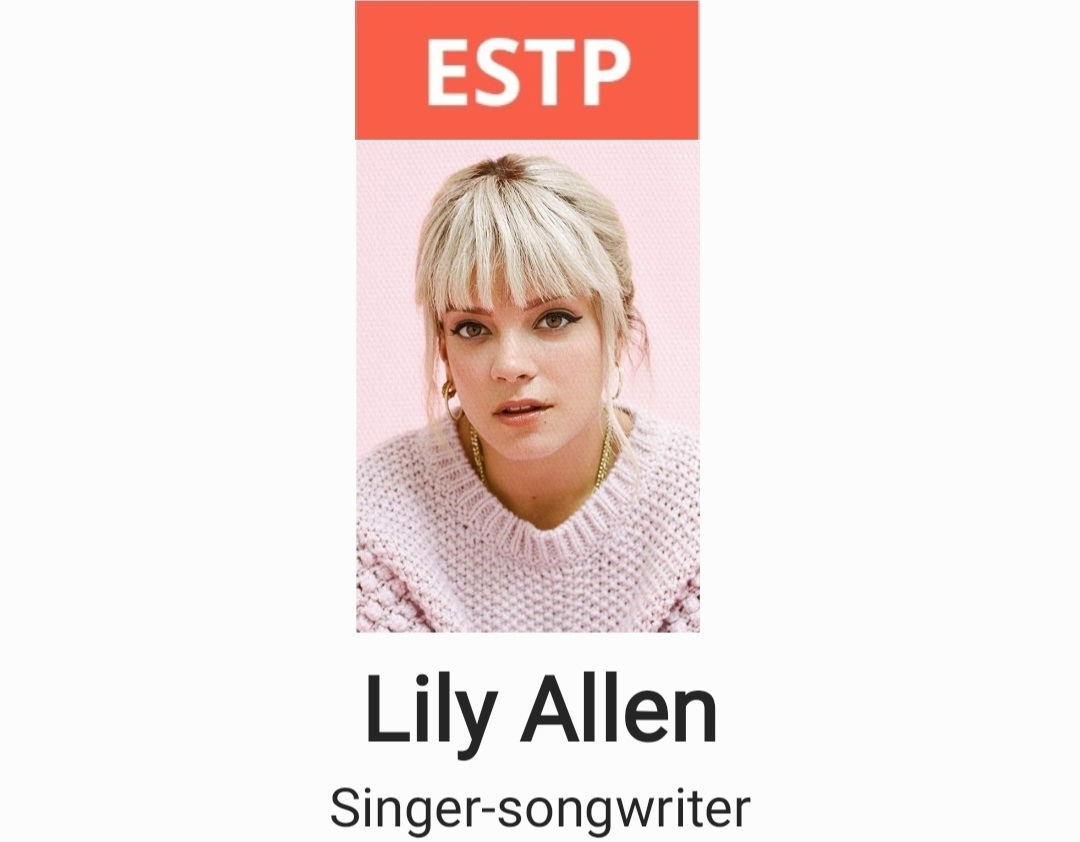
    Allen: "I never really liked school ... I didn't
    really like sort of authority, and I kind of felt
    like I wanted to educate myself, really. I just
    knew I was never gonna be at a job that
    required me to have a degree."
     
    Allen: “[I'm open] to any opportunities that
    come my way."
     
    Allen: "I definitely hope I'm touching a nerve,
    because I think that's what I like to do, is to
    get people thinking."

    NY Time: "She [has this] kind of irresistible
    frankness that has gotten her, time and
    again, in trouble."


    Plaza: "The only thing I don't like about [my
    previous roles] is if it prevented me from doing
    other things, and it has become a bit of a
    challenge, because people are stupid and
    afraid to take risks."

    Plaza: "The most fun part [is] trying to really
    find the truth in every moment so that you're
    not making these wild leaps of logic."

    Plaza: "You can't be fully prepared for 
    something like [acting] because you don't
    know how it's going to feel [until] you're
    actually in the moment doing it. ... [You] just
    [have] to kind of do it."

    Plaza: "I never had a time in my life where I
    thought 'I don’t know what I want to do'. It was
    always me saying, 'I know what I want to do
    and I want to do it now!'"
     
    Harper's BAZAAR: "[She has a] straight-
    talking attitude. ... She cuts through the
    usual obsequiousness of what can be."
     

    Plaza: "Scenes where I'm breaking down or having really crazy
    stuff happening to me [are] hard. I've not had to have all of those
    emotions coming out of me. I'm not a super emotional person."
     
    Plaza: "I’m just in the moment at all times.”

    Plaza: “I guess whatever my character has to say, I have to say. I mean
    what are words anyway? They’re just words: ‘chair’, ‘lawn’, ‘fuck’!”

    Clark Gregg: “She’s fearless, she does it in a way that’s so humiliating 
    and so embarrassing and so completely brave that you can’t help but
    love her. And as someone acting with her, can’t help but go there with 
    her.”


    Burr: "You have to be up here [in your head] and think logical, and not be in your heart."

    Burr: "[Stand up is] like, This is what I’m doing now. ... I obviously learned from a bunch of masters, but it always flowed into me. When you find what you’re supposed to do there’s not a lot of thinking. It just is."

    Burr: "Life is all about getting knocked down and learning how to come back up even harder. Not being stupid about it and keep running into the same wall the same way, you adjust and try to get over it."

    Burr: "I feel like we live in this ridiculously over-sensitive time where people get offended over nothing."


    Harding: “Honesty is the great essential.
    It exalts the individual citizenship, and,
    without honesty, no man deserves the
    confidence of the people in private
    pursuit or in public office.”

    Steven J. Rubenzer: “[He was] usually
    cheerful and pliable.”

    Steven J. Rubenzer: “Harding always tried
    to maintain a positive approach.”

    Steven J. Rubenzer: “He was decidedly
    not ‘contemplative, intellectual,
    introspective, meditative, philosophical.’”

    Steven J. Rubenzer: "Harding's enthusiasm
    and optimism were his real assets as
    president."


    Steven J. Rubenzer: "Harding had great difficulty resisting
    temptation and was not inhibited or restrained. Not liking to do
    things alone, he very much enjoyed big parties, spending time
    with people, and being part of a crowd. Definitely not known as
    cold or distant, he welcomed close relationships and was warm
    and self-disclosing. He was outgoing and friendly toward
    strangers, 'casual, easygoing, informal, natural, relaxed,' and
    made friends easily. Harding clearly saw himself as a lighthearted
    person and very plainly showed it when he was happy. His
    feelings showed in his facial and body language; his gestures
    were adroit. He often felt very energetic and vigorous."

    Steven J. Rubenzer: "Harding and Clinton ... were warm and
    self-disclosing, outgoing, friendly to those they just met, and not
    detached, secretive, or reserved. Each enjoyed being part of a
    crowd and showed his emotions in his facial and body language.
    Neither had a reputation for being distant or cold, nor was
    'bashful, shy, timid.' They preferred to do things with others rather
    than alone and made friends easily."

    Steven J. Rubenzer: "Virtually nobody considered him cold or
    calculating. Nor was he defensive or lacking in humor about his
    faults. He empathized easily with others, believed most people
    were honest and trustworthy, and assumed the best about those
    he met."

    Natasha Bedingfield

    "As a performer ... you have to just be who you are."

    "I want people to have fun. We need to let our hair down sometimes, because we get so serious."

    "I enjoy the fact that you get to try different styles."

    "I like clothes that are flattering on your figure - they can be designer stuff or not you know. It’s quite fun to mix the high street with vintage - maybe one designer item or something. ... You can finish up mixing and matching a lot with other things."


    Scott: “I want to live big. I want to laugh big, I
     want to love big, I want life to know I was here 
    … and somehow make a difference in the 
    process.”

    Scott: “Don't let your character change color
    with your environment. Find out who you are
    and let it stay its true color.”

    Scott: “[I] want to live every moment to the
    fullest.”

    Scott: “Bubbly. Perky. Outgoing. That’s what
    grownups always say about me.”


    Scott: “I [always] wanted to be on the front lines. I wanted to be there, 
    right in the middle of everything. You know, I’m the girl who loves to 
    make grand entrances. I’ll always choose vibrant, bold colors over 
    boring pastels and given a choice, I’d rather go somewhere than stay 
    home. … Rather laugh than cry.”

    Scott: “When it comes to having a relationship with God, I could sit here 
    and tell you what to do and what to say and how to pray, but where will 
    that get you if you just sit there? … Best thing I can tell you is, go after 
    God. … Christianity is not a label, but a lifestyle, something that has to 
    be lived from the inside out.”

    Scott: “I hate cliques. I’m not into being labeled in any way. I don’t like 
    wearing jeans that have somebody’s name on my back pocket. Forget 
    Khakis and shirts with little emblems and sweatshirts with big fat names 
    across the front.”

    Scott: “I wanted to be a high-impact, make-a-difference, love-the-world-
    and-turn-the-tide kind of Christian. Not a wimpy, polite, no big deal, 
    politically-correct-and-don’t-make-waves kind of Christian.”


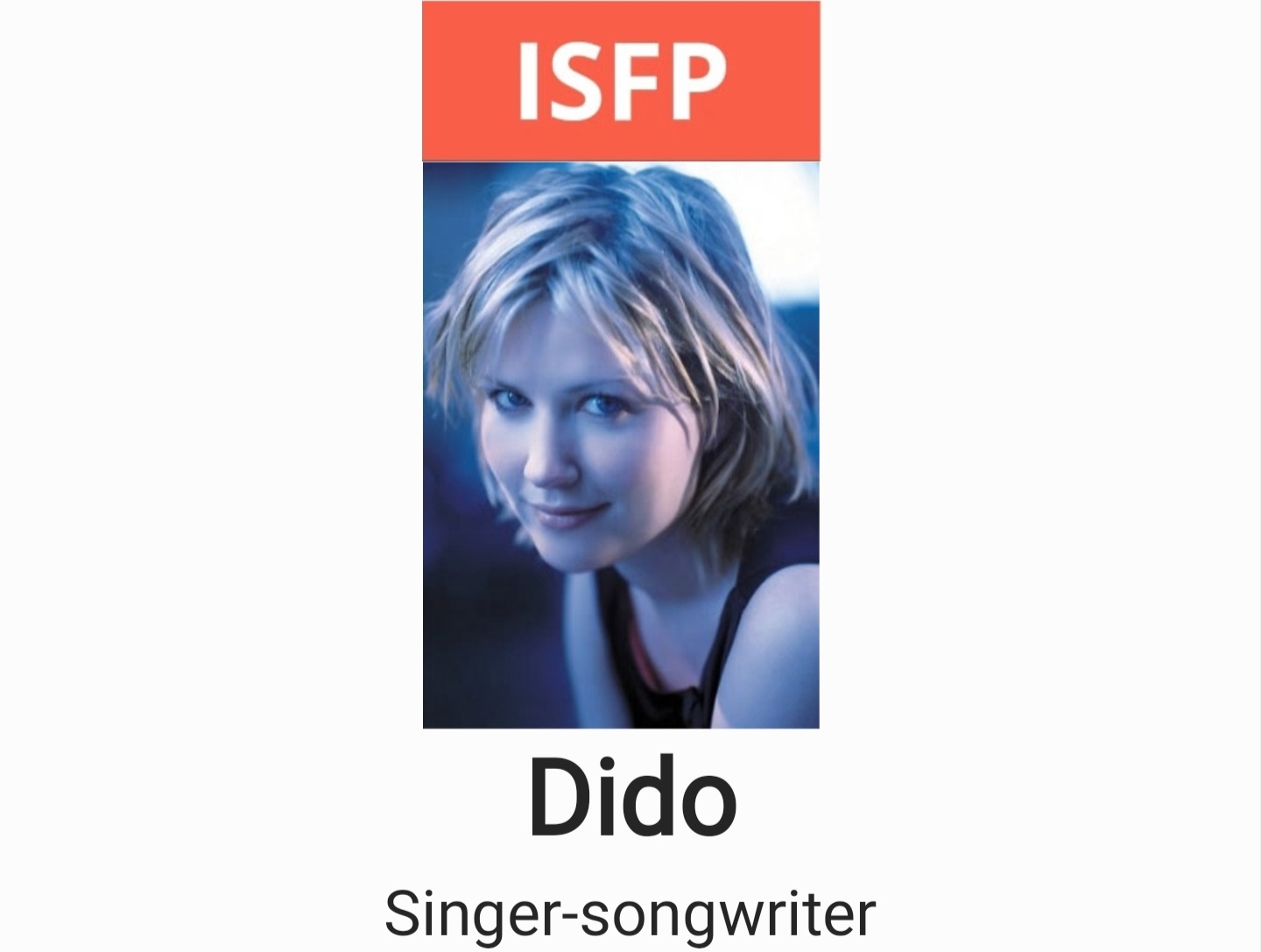
    Dido: "I really feel things deeply and that’s 
    why I write songs."

    Dido: “I write based on how I see and feel
    things ... It’s all about transferring how I see
     the world into a song."

    Dido: "To me a song is just about the flow of
    it, it just has to flow and me to never notice
    in a way, it has to feel whole and real.”

    The Guardian: "[Her parents were] angry at
    her lack of self-discipline."


    Dido: “[The way] sort of been the way I’ve been with everything in life [is]
    if I’m not feeling like I want to put the music out, then I won’t put the
    music out. Or if I’m not feeling the need to get up on stage, then I won’t
    get up on stage.”

    Dido: “People keep saying, ‘Why did you step away [from making
    music]?' It didn’t really feel like that to me. I just write songs. ... I’ve
    never made records until enough of it builds up and I feel like I’ve got
    something to say."

    Dido: "I [am] very clear on what [I] like, and what [I] don’t."

    Dido: "Music had always been my personal thing, no one invaded
    it, no one bothered me, it was absolutely mine. It was my escape.
    Whenever anything was bugging me, I'd just go and play my
    music and it made me happy. And there was something about
    them giving me money for it that, to me, symbolised it being taken
    away. I felt like I no longer had the thing that made my life worth
    living."

     Ryder's Sensing seems to be based around habit rather than around improvisation and fresh experiences (Si over Se). She continually ret...